
What a plumbing inspection cost really pays for
A plumbing inspection is an organized look at the water supply, drains, fixtures and water heater, usually written up with photos and notes. Cost depends on how many of those systems are checked and with what equipment.
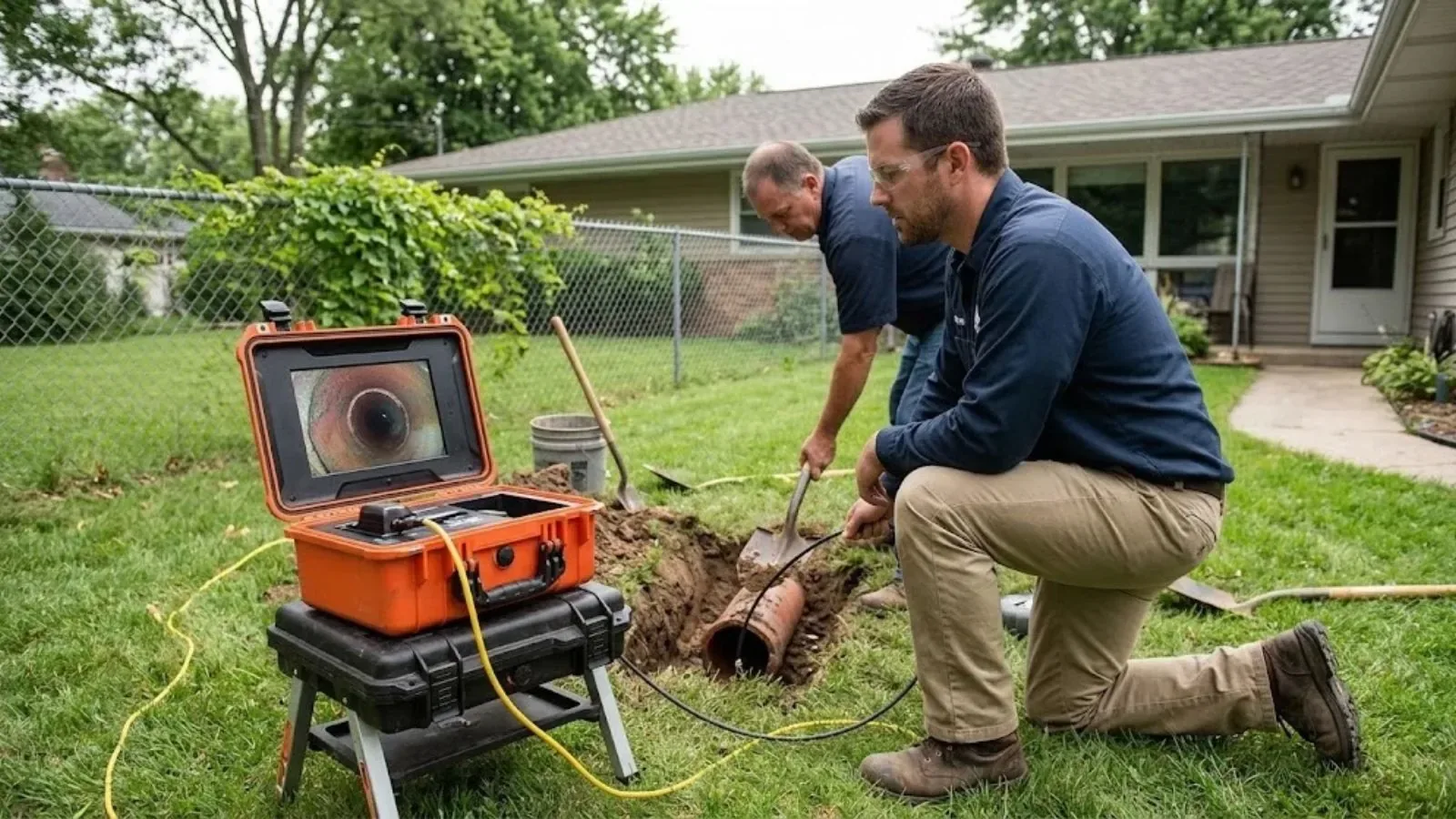
The cheapest version is visual. A technician runs every tap, flushes every toilet, looks under sinks, checks the water heater and listens for noise. The deeper version adds a sewer camera, a supply pressure test and a drain flow test, and takes more time and more gear.
Because the scope varies so much, one number rarely helps. What helps is knowing which pieces you need and asking for each to be listed.
Inspectors compare what they see against the California Plumbing Code, which is based on the Uniform Plumbing Code (UPC), so ask which code edition your report will reference.
What a typical inspection covers
Every property is different, but these four areas make up most reports.
Supply side
Static water pressure at a hose bib or gauge, shutoff valves, visible pipe material, signs of corrosion at fittings, and any pressure regulator (PRV) at the main. A gauge reading well above what fixtures are rated for is a finding.
Drain side
Run-and-flush tests on every fixture, listening for gurgles, checking cleanout access, and noting slow drains. A camera run can follow the lateral from the cleanout toward the main.
Water heater
Age from the data plate, venting, gas shutoff or electrical disconnect, T&P discharge pipe, earthquake strapping and any rust at the base or fittings. Tank leaks and sediment noise are logged here.
Fixtures and appliances
Toilets for rocking and tank leaks, faucets for drips, shower valves, hose connections to the washer and dishwasher, and disposal operation. A cracked braided hose is a common flag.
Pre-purchase, insurance and landlord inspections compared
The reason for the inspection decides the scope. This table shows how the three most common reasons differ.
| Purpose | Main question | Usually includes | Often added |
|---|---|---|---|
| Pre-purchase | What am I inheriting and what can I negotiate? | Fixtures, water heater, supply pressure, visible leaks | Sewer camera scope, whole-house pressure test, hydro-jet if flow is poor |
| Insurance | Is anything here likely to cause a claim? | Supply line condition, shutoff valves, water heater age and bracing | Written findings, dated photos |
| Landlord or turnover | What condition is each unit in? | Fixture checks, drains, water heater, under-sink leaks | Camera on shared lateral, per-unit moisture readings |
| Pre-sale | What will a buyer's inspector find? | Fixtures, water heater, drains, supply | Repair estimates before listing |
Tell the plumber the reason up front. A report built for a lender reads differently from one built for a landlord's maintenance file.
Signs you should upgrade from a visual check to a deeper test
A walkthrough is enough on a newer, well-kept property. These situations call for more.
- Repeated slow drains.
If more than one fixture gurgles or backs up, the issue may sit in the lateral, not the sink. A camera answers that quickly.
- Unexplained high water use.
If the meter moves with everything off, a pressure test and leak locate belongs on the list.
- Mature trees near the line.
Roots go after joints. A large tree over a lateral raises the odds the camera shows intrusion.
- Old or mixed pipe materials.
Visible galvanized, polybutylene or patched copper is a flag that the buried and wall sections may need a closer look.
- Water heater past its expected lifespan.
If the data plate shows an older tank, ask for a clear price on replacement alongside the inspection.
Not sure which inspection fits your situation?
Describe the property and the reason, and we will outline the scope before you book.
What drives plumbing inspection cost
No honest number covers every property. These are the levers that move the total.
| Cost driver | Why it changes the price | What to ask |
|---|---|---|
| Property size and fixture count | More bathrooms, kitchens and hose bibs mean more testing time | How many fixtures does the price assume? |
| Camera sewer scope | Adds equipment, access to a cleanout and a recorded review | Is the recording and written summary included? |
| Supply pressure test | Requires isolating the supply and holding pressure for a set time | What pressure and how long? |
| Access problems | Missing cleanout, locked crawlspace or tight attic costs time | Who arranges access and what if it is missing? |
| Report format | Photo reports for lenders or insurers take longer than verbal findings | Do I get a written report with photos? |
| Building type | Multi-unit and commercial buildings need more passes | Is the price per unit or per building? |
A simple fixture walkthrough is often quoted in the low hundreds of dollars, and adding a sewer camera scope commonly pushes the total higher. Treat those as loose, commonly quoted ranges and not as our prices. Ask the plumber to itemize the quote so each test has its own line, then call for your real number.
How we would run an inspection
A clean inspection follows a repeatable order so nothing is skipped.
- 1
Walk the property and ask questions
We ask what prompted the inspection, what you have already noticed and where the main shutoff and cleanout are. The shutoff location matters in a hillside house where it may be in a garage wall, and in a beach lot where it may be in a front box.
- 2
Test supply and drains
We check static pressure, run every fixture and look for leaks at supply stops. A drain camera goes in through the cleanout when the scope includes the lateral.
- 3
Review the water heater and fixtures
We read the data plate, check strapping, venting, the relief valve and the discharge pipe, then spot-check toilets and faucets.
- 4
Report and recommend
You receive findings sorted by urgency, with a clear price before any repair work starts. Urgent items come first, cosmetic items last.
Manhattan Beach note
Manhattan Beach sewer laterals are the owner's job
The City maintains most sewer main lines, but the lateral from a home or business to the main is the property owner's responsibility under Manhattan Beach Municipal Code 5.36.240. That makes a camera scope more than a nice extra for a buyer, because a repair after closing is on the new owner.
If the scope shows a blockage that needs cleaning, the City asks for 24 to 48 hours notice before you flush or clean a lateral, since extra flow can block the main and cause an overflow. The City Utilities office is at (310) 802-5304, Monday to Friday, 8:00 to 4:30.
Sources: City of Manhattan Beach
Getting the most from your inspection
Clear the area under sinks and around the water heater before the visit. Know where the main shutoff and cleanout are. If you are buying, ask for access during the due diligence window, because a scope after that deadline leaves little room to negotiate.
When the report comes back, ask which findings are safety or leak risks and which are wear items. A drain camera is the same tool used in a full sewer camera inspection, and if the recording shows a blockage, hydro jetting clears it with high-pressure water without cutting into the line.
Our crews also inspect in neighboring towns. If the property is in Hermosa Beach or Redondo Beach, ask your city public works about its own lateral rules, since they differ from Manhattan Beach.
FAQs
Plumbing inspection questions
A general home inspector checks visible plumbing: faucets, toilets, water heater condition, visible leaks and water pressure at fixtures. They do not usually run a camera down the sewer lateral or hold a pressure test on buried lines. Those are separate plumbing-specific services.
Many buyers add one because the lateral from the house to the City main is the owner's responsibility and is buried. A recording can show roots, offsets, cracks or a belly before you own the problem. Whether to request one is your call and your agent's, and the seller may negotiate.
A fixture-and-water-heater walkthrough on a typical home often takes one to two hours. Adding a sewer camera run, a pressure test or a multi-unit building takes longer. Ask for the expected time when you book.
Insurers usually care about the condition of supply lines, water heater, shutoff valves and any signs of past leaks. Some ask for a written report or photos. Check with your insurer which items and what format they accept before you book.
Landlords commonly schedule one between tenants to document the starting condition of fixtures, the water heater and drains. Notice and entry rules apply to occupied units, so check California tenant rules or a property manager before scheduling.
Because under Manhattan Beach Municipal Code 5.36.240 the lateral between the building and the City main is the property owner's responsibility, while the City maintains most of the main lines. A scope tells you what you are inheriting. If the lateral needs cleaning later, the City asks for 24 to 48 hours notice before you flush it.