
Slab leak repair
Slab leak repair starts with finding the right pipe
Slab leak repair means fixing a water supply line that has failed where you cannot reach it, inside or under the concrete floor of a slab-on-grade home. The water is pressurized, so it keeps escaping until someone stops it, and it can wet insulation, flooring and the soil under the foundation.
We treat it as an emergency because the cause matters less than the clock. The longer the water runs, the more material gets soaked, and the more a drywall and flooring bill grows beyond the plumbing one. Call the 24/7 line before the floor shows damage.
Rerouted or replaced lines are installed to the California Plumbing Code, which is based on the Uniform Plumbing Code (UPC), and ask the building department whether your repair needs a permit.
A hissing floor or a hot spot you cannot explain
If you hear water running below the floor with every fixture closed, feel warm tile near a bathroom or kitchen, or see water seeping through baseboards, act now. Our dispatch is open 24/7, so a night or weekend discovery gets answered, and we book the earliest visit we can, with same-day appointments when available.
Slab leaks on hot lines can also run up the gas or electric bill, since the water heater keeps working to replace hot water that is draining into the ground.
While you wait for the plumber
- Close the main water shutoff, usually near the front hose bib or at the meter.
- Turn off the water heater. For electric units, switch the breaker. For gas, set the control to pilot or off.
- Open one faucet low in the house to relieve pressure, then close it once the flow stops.
- Take photos of warm spots, damp baseboards and the meter register, and keep them for your insurer.
Signs that the leak is under the floor
Slab leaks are usually announced by indirect clues. Two or three together make the diagnosis likely.
- Meter moves with everything off
Shut every fixture and watch the low-flow indicator. A moving indicator means water is leaving the system somewhere.
- Warm or hot floor patches
Hot water lines run in the slab in many homes. A leak sends heat up through tile or hardwood.
- Sound of water with nothing running
Put an ear to the floor in a quiet house. A steady hiss or trickle is a strong clue.
- Damp carpet or lifting flooring
Moisture rising through concrete makes carpet edges damp and wood boards cup.
- Cracks or movement in walls
Water softening the soil under a foundation can let it shift slightly, opening hairline cracks above.
- Unexpected hot water bill or slow hot taps
The water heater is working to replace hot water draining into the ground, and hot water takes longer to arrive.
What to do before the plumber arrives
These steps limit damage and keep you safe while the dispatch line gets a plumber moving.
- Shut off the main water valve
If the meter keeps spinning with fixtures off, closing the main stops the loss while you wait.
- Keep people and power away from wet floors
Do not use outlets or appliances on soaked slab areas, and switch off the breaker for a wet room if you can reach it dry.
- Photograph and write down what you see
Note warm spots, damp flooring, meter readings and times, because your insurer will ask.
How the repair process works
- 1
Confirm and isolate
We run a pressure test that separates hot from cold and splits the system into zones. The branch that loses pressure points at the area to listen to.
- 2
Pinpoint the spot
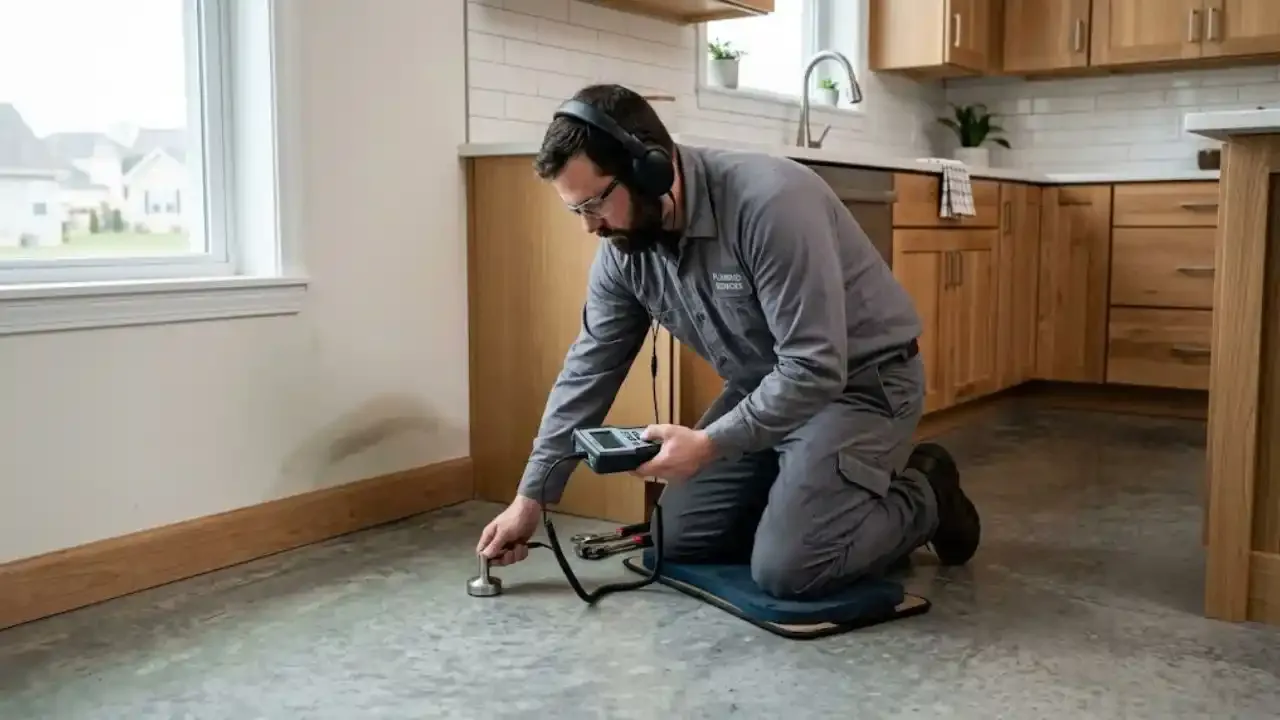
An acoustic ground microphone and, where useful, a thermal camera mark the leak on the floor. Our leak detection work explains the tools in more detail.
- 3
Review options with you
We lay out the choices below with the honest trade-offs, then give a clear price before work starts.
- 4
Repair, test and restore
After the fix we pressure test again before anything is closed up. Flooring and finish repair are scoped separately.
Slab leak repair options compared
Three approaches cover most jobs. The right one depends on how many leaks there are, how old the pipe is and what the floor above is made of.
| Option | What it involves | Fits best when | Trade-off |
|---|---|---|---|
| Spot repair | Break the slab over the leak, cut out the bad section and splice in new pipe. | One leak, the rest of the pipe in good shape. | A new leak can appear later on the same old pipe. |
| Reroute | Abandon the leaking line under the slab and run new pipe through walls or attic to the same fixtures. | Floors that are costly to open, or a line with repeated failures. | Opens walls and ceilings instead of the floor, so some drywall work is part of it. |
| Repipe | Replace the supply system, usually with PEX or copper, and leave the slab alone. | Multiple leaks or pipe in poor condition. | The biggest job up front. See our repiping page. |
| Epoxy lining | Coat the inside of an existing pipe with a resin after cleaning. | Sound pipe with small, early pinholes. | Depends on the pipe, fittings and local code acceptance, so ask the building department before choosing it. |
Epoxy lining is not a fit for every pipe. If the pipe walls are already thin or the leak is large, lining will not hold, and we will say so.
What causes slab leaks
Pipes under a slab fail for ordinary reasons. Copper can pit from the inside when water chemistry is aggressive, or from the outside where it touches concrete or a rough edge. Pressure above what the fixtures were meant for adds wear, which is why a pressure regulator matters.
Soil movement is the other major cause. A line is pinned inside concrete, so any shift in the ground puts strain on joints. Coastal lots with sandy soil can behave differently from heavier ground, and an engineer or the building department is the right source for what applies to your property.
Why does the problem keep returning?
A second slab leak a year after the first
Owners often call after a spot repair and say the leak is back. Usually the pipe was wearing out in many places, and the repair fixed only the first one to fail. If the plumber found pinholes along the line, ask about a reroute or a full repipe rather than a third spot fix.
We tell you what the cut section looked like. Pitted copper, green deposits or thinned walls mean the remaining line is likely close behind.
Hear water but cannot see it?
A pressure test usually tells us within one visit which line is losing water.
What drives the cost of a slab leak repair
No honest number can come before the leak is located. These factors decide the bill.
A leak near a wall and shallow under tile is simpler than one under the middle of a large room or a kitchen island.
A spot repair, a reroute and a repipe differ a great deal in scope and in how long the lines should last.
Tile, stone and engineered wood are costly to lift and match. Carpet is easier.
Several leaks or tired pipe push the job toward reroute or repipe.
Concrete patching, flooring and drywall are separate line items, and we itemize them so you can compare.
Insurance may cover sudden accidental water damage and sometimes the cost to access the pipe, but wear and a slow leak are often excluded. Ask your insurer before work starts and keep our written findings.
Manhattan Beach note
Slab homes, hillside homes and who to ask
Not every house has a slab foundation, and we do not assume yours does. Whether you live in the Hill Section, the Sand Section or east of Sepulveda Boulevard, the first question is what is under your floor: a concrete slab or a raised floor over a crawlspace. A leak under a raised floor is far easier to reach.
Before any cutting or reroute, ask the Manhattan Beach Community Development department what rules apply to the work. The same approach applies in neighboring towns, and our Hermosa Beach service area gets the same options.
Sources: City of Manhattan Beach
FAQs
Slab leak questions answered
Yes. The dispatch line stays open 24/7. If you hear water below the floor at midnight, close the main, shut off the water heater and call. We book the earliest visit we can, with same-day appointments when available.
Many slab leaks are slow enough to be located in daylight, but we can talk through what you are seeing at any hour.
Warm spots in the floor, a meter that moves with all fixtures off and a hiss from the floor are strong signs. A leak under a sink or behind a wall usually shows water above the floor level.
Spot repair does require opening the slab over the leak. A reroute avoids the floor by running new pipe through walls or the attic. We explain both before work starts.
It can work on sound pipe with small leaks, but not on badly worn pipe or large breaks. Ask the building department whether it is accepted for your system, and ask us for a candid opinion on your pipe.
Scope sets the time. A spot repair is a shorter job than a reroute or a repipe. We give you a plan once the leak is located.
Coverage varies. Many policies treat sudden accidental discharge differently from long-term seepage and wear. Call your insurer before repair begins.
Usually yes, but water is off for part of the work and concrete dust is common. We tell you the water shutoff window ahead of time.