
A planned install, done on your timeline
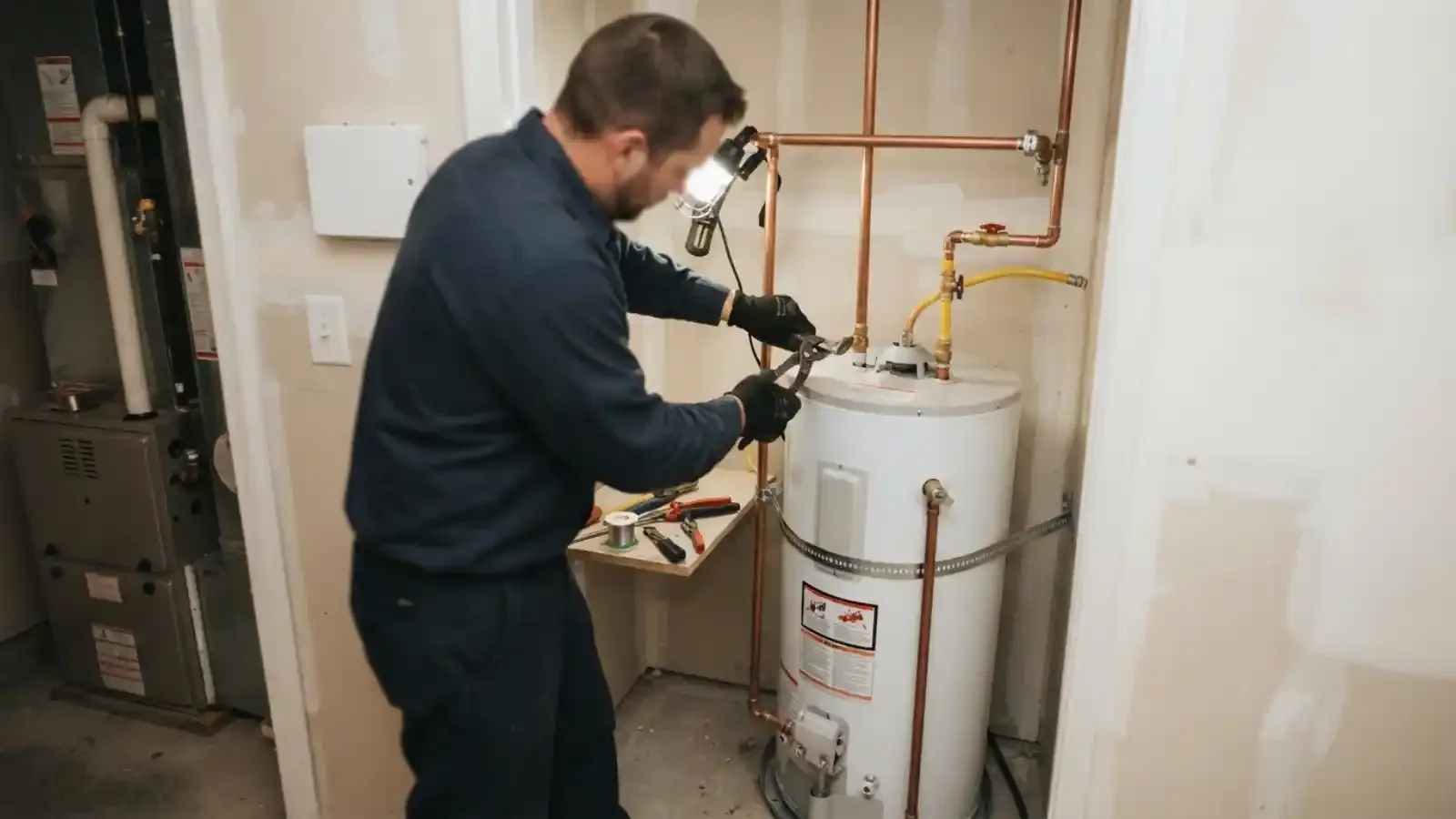
Water heater installation is the process of choosing, placing and connecting a new water heater, including fuel, venting, water supply, safety valves and earthquake bracing. When it is planned, you can compare tank types, think through size and fix the surrounding issues that a midnight swap rarely allows.
The best installs begin with questions about the household, not the product. How many people shower in the morning, how far is the heater from the farthest bathroom, and does anyone run a dishwasher and a washer at the same time as a soaking tub? The answers settle capacity, recovery rate and whether a circulation line is worth adding.
We also answer emergencies around the clock, so if your tank has already failed, go to emergency water heater replacement instead.
Decisions to make before the day of the install
Four choices shape the job. Settle them early and the install itself is straightforward.
Where it will live
Garage, closet, attic, crawl space or outdoor enclosure each has clearance, access and venting rules. Gas models need combustion air, and a heat pump unit needs open space around it. A hillside lot with stairs between the street and the heater adds carry time, so mention it on the call.
Which fuel
Keeping the existing fuel is the fastest and cheapest path. Moving from gas to electric or heat pump brings a 240-volt circuit and sometimes a panel review. Moving to gas brings a gas line and a vent, which not every location can take.
Tank or tankless
A tank stores hot water and recovers slowly. A tankless unit heats on demand and needs more gas line, venting and maintenance. The tankless water heater page lays out sizing and upkeep.
Capacity and recovery
Tank size is only half the picture. The first-hour rating on the label tells you how much hot water the unit delivers in a busy hour, which is what really matters on a Monday morning.
Sizing a tank by household
These are common starting points, not rules. Usage patterns and the first-hour rating on the label override a chart.
| Household | Typical tank size | Notes |
|---|---|---|
| 1 to 2 people, one bathroom | 30 to 40 gallons | Gas is the better fit when recovery speed matters |
| 2 to 4 people, two bathrooms | 40 to 50 gallons | The most common range for a family home |
| 4 to 6 people, three bathrooms | 50 to 75 gallons | Check the first-hour rating, not only the gallons |
| Large household or soaking tub | 75 gallons or more, or two units | A tankless or hybrid setup may suit better |
| Short-term rental turnover | Sized for back-to-back showers | Peak demand matters more than daily average |
Heat pump models usually list a lower recovery rate in heat pump mode, which is why capacity is often stepped up by one size.
How a planned install runs
You will know what happens, in what order, before the crew arrives.
- 1
Walk-through and measurements
We confirm the location, check the gas line, the electrical supply, the vent path and the clearances. We also measure street-side water pressure with a gauge, since a high reading changes the parts list.
- 2
Written price and parts list
The quote lists the heater, connectors, shutoff valves, straps, pan, discharge pipe, expansion tank if needed, and anything the code or the building department asks for. Nothing starts until you agree.
- 3
Install and test
The old heater, if any, is drained and removed. The new unit is set, braced, piped, vented and filled with a hot tap open to purge air. Fuel is restored and we test the burner or elements, the relief valve discharge and the connections.
- 4
Handoff
We show you the shutoff valves, the temperature setting, the drain and the relief valve. You get the model and serial numbers for your warranty registration, and a flush and anode schedule that fits your water.
Upgrades that belong in the same visit
Several items are cheap to add while the heater is open and costly to retrofit later.
Expansion tank
If a PRV or check valve closes your plumbing system, thermal expansion raises pressure. A small diaphragm tank on the cold line absorbs it, and its air charge is matched to house pressure.
Drain pan and leak sensor
A pan with a drain line, or a floor sensor that closes a motorized supply valve, turns a failure into a small mess. This matters most above living space and in finished garages.
Isolation valves and unions
Full-port shutoffs and dielectric unions make later service faster and slow galvanic corrosion where copper meets steel. They cost little during the install and save time on every future visit.
Bracing, code and permits
California Health and Safety Code section 19211 requires new and replacement water heaters to be braced, anchored or strapped against falling in an earthquake. It applies to standard units of 120 gallons or less for which a preengineered strapping kit is readily available. Every install we do includes proper straps anchored to framing.
Beyond bracing, an install brings in the relief valve and its discharge pipe, gas shutoff and sediment trap, combustion air, venting clearances and a safe temperature setting. Permit rules vary, so ask the Manhattan Beach Community Development / building department what your project requires, and confirm any contractor's license at cslb.ca.gov before you sign.
Manhattan Beach note
Installing in a coastal city with variable water
Manhattan Beach tap water is a blend of groundwater and imported water, and the City's 2023 Annual Water Quality Report lists average hardness of 392 mg/L for groundwater and 136 mg/L for imported water. A new heater in a harder-water home will scale faster, so plan for a yearly flush and a rod check.
The City also reports a chlorine and chloramine residual averaging 1.8 mg/L, which is one reason rubber seals and flappers in fixtures age on a schedule. And near the ocean, a heater in an open garage sees salt air, so stainless or coated fittings and a tidy vent connection last longer.
Sources: City of Manhattan Beach
Planning the install?
Describe the space and the household, and we will talk through sizing and options.
What shapes the cost of a water heater installation
A planned install is easier to quote than an emergency because the variables are known. The price you receive will itemize these.
Standard tank, power-vent, condensing and heat pump models span a wide spread, and so does capacity.
A new circuit, a panel upgrade or a gas line extension is separate work from the heater.
Reusing an existing flue is simple. New vent runs, power-vent fans or condensing exhaust pipe add parts and labor.
Tight closets, attics and stairs slow the job and may add a helper.
Expansion tank, pan, discharge pipe, shutoffs and corrected connections appear as line items.
Insurance typically does not pay for a planned upgrade. It may help when a sudden failure causes water damage, so ask your insurer.
FAQs
Water heater installation questions
A like-for-like tank swap in an accessible space is often a half-day job. Fuel conversions, new venting or a panel upgrade take longer. We confirm the timeline when we scope the work.
Permit rules vary by project. Ask the Manhattan Beach Community Development / building department what your installation requires.
Start with household size and bathrooms, then check the first-hour rating on the label. A 40 to 50 gallon tank suits many two-to-four person homes, but heavy simultaneous use calls for more.
Often yes, but it means new supply lines, a new gas line or circuit, and a new vent path. Clearances, combustion air and drain access decide what is allowed.
It can be, provided the space has enough open air and the temperature stays within the unit's range. Check the manufacturer's spec sheet for volume and clearance requirements.
Yes. We drain, disconnect and haul the old unit as part of the install.