
Sewer line cleaning
The pipe between your building and the City main
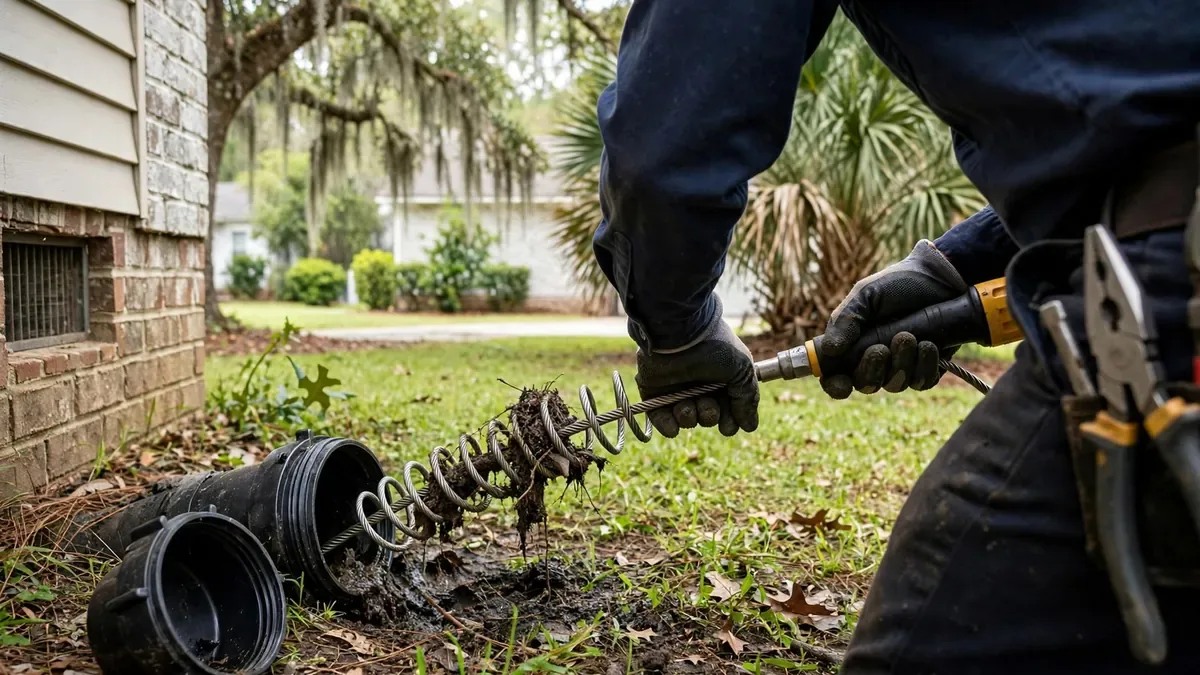
Sewer line cleaning means clearing the building sewer, also called the lateral, which is the single pipe where every sink, shower, toilet and washer in the building finally joins. Typically it is a four inch line that runs under the yard or driveway to the City main in the street. If it is partly blocked, every fixture slows. If it is fully blocked, the lowest one overflows.
This is different from clearing a fixture trap or a branch inside a wall. The work happens at the cleanout, a capped pipe outside the building, using larger cable machines or a hydro-jet nozzle sized for the lateral. A camera then confirms the pipe is open and tells you why it closed up.
Manhattan Beach 24/7 Plumbing answers sewer backups at any hour and offers same-day appointments when the schedule allows for lines that are slow but still draining.
Building drains and sewers are regulated by the California Plumbing Code, based on the Uniform Plumbing Code (UPC), including access through cleanouts, which is the first thing a crew looks for before cleaning a line.
Sewage coming up in the lowest drain of your building
A sewage backup is the one plumbing problem that damages floors, cabinets and drywall within hours, so call the 24/7 line right away. Nights, weekends and holidays are normal for this work, and we send a plumber with a cable machine and a jetter for a main line that has quit.
The water on your floor came from toilets and drains, not from a clean supply. Stay out of it barefoot, keep pets and children away, and treat anything it touches as contaminated.
While you wait for the plumber
- Stop flushing and running water. Pause the washing machine and the dishwasher mid-cycle.
- If the overflow is near outlets or appliances, switch off power to that area at the panel only if you can reach the panel without stepping in water.
- Lift furniture legs onto blocks, pull up area rugs and open windows for airflow.
- Take photos of the water and any damage for your insurer before you clean up.
- Find the cleanout and clear a path to it so the crew can start right away.
How a main line gets cleaned
The order matters more than the machine.
- 1
Find the cleanout
Most properties have a capped two-way or one-way cleanout outside, near the foundation, along a side wall or at the property line. Without one, we work through a roof vent or by pulling a toilet, which is slower and messier.
- 2
Open and check pressure
We open the cap slowly. Standing water in the riser means the blockage is downstream of this point. We set up protection around the opening before releasing anything.
- 3
Clear with cable or jet
A sectional cable with a root saw or cutter goes in first for roots and compacted waste. If the pipe wall is coated with grease or scale, a hydro-jet nozzle follows. We stay on the line until water flows freely.
- 4
Camera the run
A self-leveling camera head on a push cable rides down the lateral. We look for roots at the joints, low spots with standing water, cracks, separated joints and any material change in the pipe.
Manhattan Beach note
Who owns which stretch of sewer in Manhattan Beach
The City maintains most sewer main lines. The lateral from your home or business to the main is the property owner's responsibility under Manhattan Beach Municipal Code 5.36.240. A blockage between your cleanout and the street belongs to you, and one in the street main belongs to the City.
Before flushing or cleaning your lateral, call the City so crews know. It asks for 24 to 48 hours notice, because extra flow can block the main and cause an overflow. City Utilities is at (310) 802-5304, Monday to Friday, 8:00 to 4:30. After hours, the call center is (310) 802-5000.
Sources: City of Manhattan Beach
What blocks a main sewer line
The cause decides whether cleaning is a fix or a stopgap.
Roots
Roots enter at joints, searching for moisture and nutrients. They grow into a net that catches paper. Cutting them opens the line but they regrow.
Grease and wipes
Fat from the kitchen congeals on the pipe wall. Wipes labeled flushable then snag on it and build a mat. It is a frequent cause in multi-unit buildings.
A belly
A section that has sagged holds a pool of water, and solids drop out there. Cleaning clears the pool but it refills, so the answer is repair.
Joint offset or collapse
Ground movement can separate or shift joints. A lip at an offset snags debris. A collapsed section stops a cable dead, and cleaning cannot fix it.
Cable, jet or camera on a main line
| Method | Works best on | Watch for |
|---|---|---|
| Cable with root saw | Roots and soft plugs | Leaves residue, regrowth within months |
| Hydro-jet | Grease, scale, silt and fine roots | Not for cracked or collapsed pipe |
| Cable, then jet | Heavily blocked, long laterals | Takes longer, usually the cleanest result |
| Camera only | Planned checks, buyers, repeat problems | Does not clear anything |
If the pipe is damaged, cleaning only postpones the problem. At that point you are looking at sewer line repair with trenchless or open-trench options.
Not sure it is the main line?
Describe which drains are slow and in what order, and we will tell you what it points to.
No cleanout?
What to do when your property has no cleanout
Some properties have a buried or missing cleanout, or one with a cap that is rusted or painted shut. Without access, a plumber works through a toilet or a roof vent, and there is a limit to what a cable can do from that angle.
Installing a proper cleanout near the building solves this for good. It also lets you meet the City's notice request calmly instead of during a backup. If you have a cleanout hidden under a flower bed or paver, a pipe locator and a quick dig can find it.
Rentals and commercial
Landlords, property managers and food businesses
A duplex or a four-unit building sends all its waste down one lateral, so a main line backup hits the unit with the lowest drain first. Managers should know where the cleanout is and who can authorize the work after hours.
Restaurants and cafes should expect to clean their laterals on a schedule. Fat builds up whether or not the drains feel slow. Our commercial plumbing service covers the grease interceptor, floor drains and lateral together. We also work in El Segundo, where commercial buildings are common.
What affects the cost of sewer line cleaning
We give a clear price before work starts. These items move it.
An outside cleanout makes the job simpler. Working through a toilet or a roof vent adds time.
A short lateral to a front-yard main is quick. A long one across a lot costs more because there is more pipe to clear.
Soft debris is quick. Dense roots or years of grease need heavier tools, more passes or both.
A camera run after the cleaning adds time and gives you a recording of the pipe's condition.
A night, weekend or holiday visit can carry a different rate than a scheduled weekday. Ask when you call.
Policies often cover sudden damage but not slow backups from roots or wear. A water backup endorsement may add coverage. Check with your insurer before the job, and keep your photos.
FAQs
Sewer line cleaning questions from Manhattan Beach property owners
Yes. Our dispatch line is open 24/7 and a sewage backup is an urgent call. Tell the dispatcher which drains are affected, whether water is still rising and whether you know where the cleanout is. Same-day appointments are available when the schedule allows for slow lines that have not yet overflowed.
A single slow sink or tub is a branch clog. When multiple fixtures slow together, or the lowest drain in the building fills when you flush upstairs, the main is the likely cause. A toilet that bubbles when the washer drains is another clue.
Often a capped pipe outside the building near the foundation, along a side wall or near the property line. It looks like a 3 or 4 inch plastic or iron pipe stub with a cap. If you cannot find it, tell the dispatcher and we will help you locate it or plan another entry.
The City of Manhattan Beach asks for a call before you flush or clean your lateral. It prefers 24 to 48 hours notice, because the extra flow can block the main and cause an overflow. In a live backup, call the after-hours line and tell them what is happening.
No. Cutting roots clears the line but the roots stay alive outside the pipe. Regrowth depends on the size of the gap they entered through. A camera shows where, and a repair or liner can close the entry point.
Often it is not, unless you added a water backup endorsement, and routine clogs from roots or wear are usually excluded. Ask your insurer. Take photos and keep receipts before you clean up.