
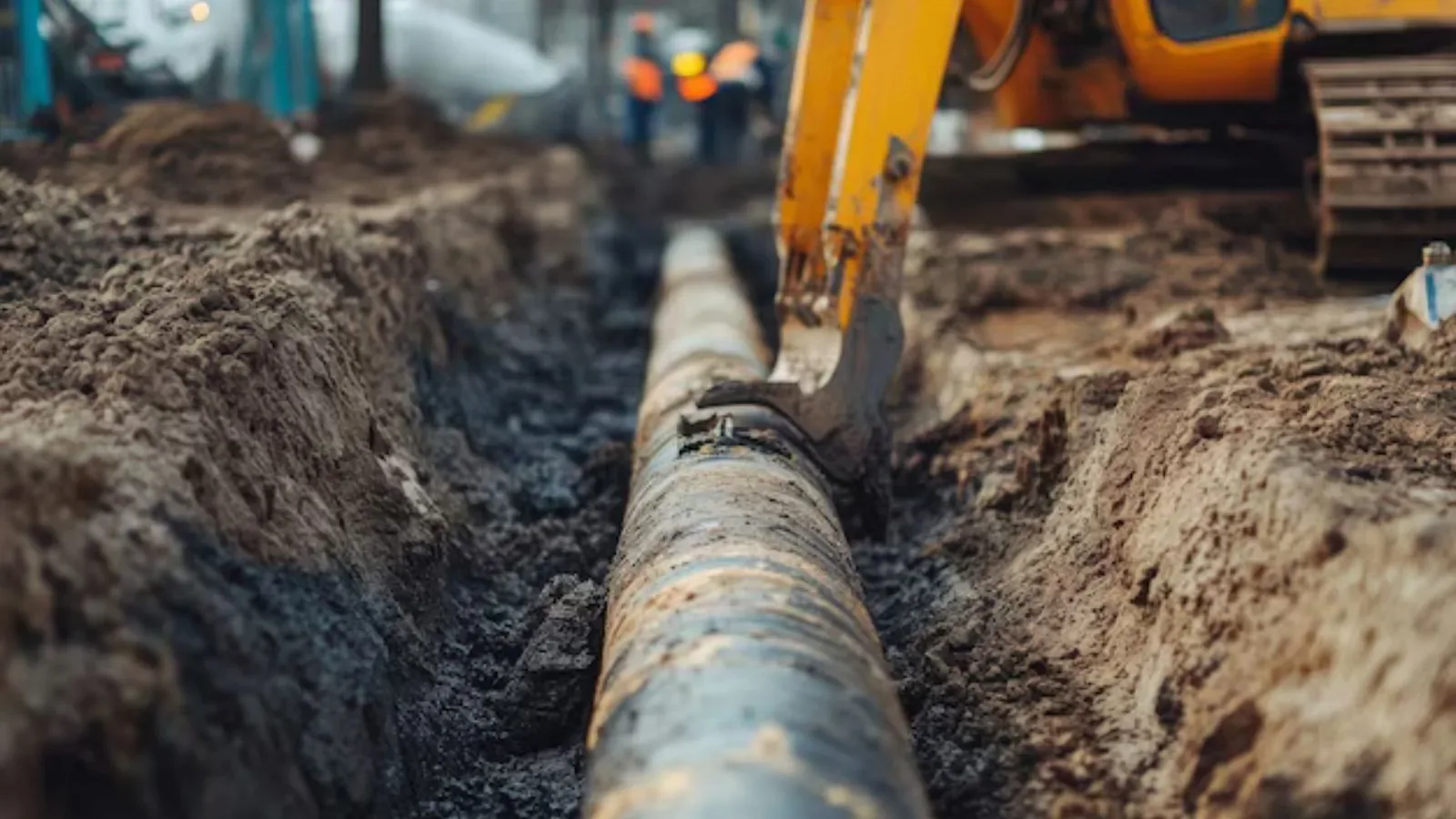
Water line repair
The pipe between the meter and your house
Water line repair is the work of fixing or replacing the buried service pipe that runs from the water meter to the building. It is the only supply you have. When it fails, the whole house loses pressure or water altogether, and the leak soaks soil you cannot see.
Many service lines are copper, with older homes sometimes carrying galvanized steel and newer ones using plastic. We fix all of them, and we recommend material based on what the soil, the pressure and the budget call for.
No water, or water pouring from the ground
When the supply line breaks, the signs are loud. You may find a geyser or a growing puddle between the street and the house, or taps may run dry and sputter. Call the 24/7 line any time, and tell us whether the water is still running on the surface.
A buried break can erode soil under paving and flower beds. We schedule same-day appointments when available, and we can talk you through isolating the line first.
While you wait for the plumber
- Close the house main valve and the valve at the meter if you can reach it with a meter key. Do not tamper with the meter itself.
- Open one tap at the lowest point to bleed pressure, then close it once the flow stops.
- Photograph the wet area and the meter register before anything changes.
- Keep children and pets off the saturated ground, which may be unstable near paving.
Who owns what?
Where the meter ends and your responsibility begins
Responsibility on a water service is split between the utility and the property owner, and the line between them is not the same everywhere. Guessing wrong can mean paying for a repair that was the utility's, or waiting on a utility for something that is yours.
Ask your water utility where the meter ends and your responsibility begins. Do that before any digging, and certainly before anyone replaces a line near the street. The City of Manhattan Beach supplies water here. Cal Water serves Hermosa Beach and Redondo Beach and parts of some nearby areas, so check which system serves your address. If you live there, see our Redondo Beach page and the Cal Water site.
How a failing water line announces itself
- Pressure that has dropped for the whole house
If every tap runs weak at once, check the main valve and regulator first. If both are fine, suspect the buried line.
- Wet or sunken ground
Look along the path from the meter to the house. A strip of green grass or a sunken paver can mark a leak.
- Meter that runs with the house shut off
Close the house main and watch the low-flow indicator. A moving indicator means the leak is between the meter and the valve.
- Rusty or muddy water
Corroded steel or a broken pipe pulling in soil can discolor the supply.
- Hissing near the meter box
Water escaping under pressure makes a steady hiss you can hear when the yard is quiet.
- A bill that has jumped
A steady leak shows as gradually rising use. Our leak detection service separates the line from the house plumbing.
Trench or trenchless: which way should the new line go?
There are two ways to renew a buried line. Both end with a pressure test, and the method depends on what sits above the pipe.
Open trench
We dig along the line, cut out the damaged pipe and lay new pipe in a prepared bed. It is direct, lets us see the soil and fittings, and handles odd bends well. It also disturbs the yard, and any driveway, patio or planting above the line needs restoring.
Trenchless
We dig small access pits at each end and pull or burst a new line through the old path. It spares lawns, hardscape and mature plantings, and it is often faster to restore. It needs a reasonably straight run and the right soil, and it may not suit lines with sharp bends or many taps.
We tell you which method suits your lot after we have located the line. Trenchless is not automatically better. It depends on the route, the depth and what is above it.
Repair or replace the whole line?
A short break on a sound line can be fixed with a section. A line with several failures is a different case.
| Situation | Usual choice | Why |
|---|---|---|
| One clean break, pipe otherwise good | Section repair | Quick to do and limited digging. |
| Pinholes or corrosion at several points | Full line replacement | Fixing one spot leaves the rest to fail. |
| Galvanized steel, rusty water, low flow | Full replacement | Galvanized scales inside and restricts flow over time. |
| Line passes under a patio, tree or driveway | Trenchless replacement if the route allows | It avoids lifting hardscape. |
| Pressure above what fixtures are rated for | Regulator replacement and line check | High pressure stresses every joint. |
The pressure regulator: a small part that protects the whole line
A pressure regulator, also called a PRV, is a bell-shaped valve near the main shutoff that lowers street pressure to a level the house can tolerate. Residential systems are typically set somewhere in the range of 50 to 70 psi.
A failing regulator lets full pressure into the house, which stresses water heater connections, fittings and washing machine hoses, and can cause banging and leaks. We check the setting with a gauge on a hose bib whenever we repair a line. If yours is old or stuck, we replace it, since the new pipe should not run at the old pressure.
Gauge shows a drop but the yard looks dry?
We pressure test the line to see whether the break is underground or inside.
What shapes the price of a water line job
A longer or deeper run takes more excavation and more pipe.
Each has a different set of equipment and restoration costs.
Paving, concrete and landscaping must be removed and replaced. A clear lawn is easy, a stamped patio is not.
Copper, PEX and other approved materials differ in cost and performance.
Rules vary by job. Ask the Manhattan Beach Community Development department what applies to yours.
Homeowners insurance often excludes underground service line failures from wear, and some insurers sell an add-on. Ask your insurer and your water utility whether any line protection applies.
Manhattan Beach note
Water quality and your line
The City's 2023 Annual Water Quality Report says tap water met all EPA and state primary drinking water standards and that lead and copper come mainly from corrosion of household plumbing. When a service line is replaced, the interior pipe is the next question. If yours is old, talk to us about repiping while the line is open.
Sources: City of Manhattan Beach
FAQs
Water line repair questions
Yes. Dispatch is open 24/7. If your line has broken and water is pouring out, call, close the house main and tell us what you see. We book the earliest visit we can, with same-day appointments when available.
Ask your water utility where the meter ends and your responsibility begins. The boundary differs by utility and property, and getting it in writing prevents surprises.
Close the main shutoff at the house and read the meter. If it keeps moving, the leak is between the meter and the valve.
It replaces a buried pipe through small access pits instead of a continuous trench. It suits many lots, but depends on the route, depth and soil.
Many homes have one near the main. If yours is missing, stuck or set high, we can test and replace it as part of the repair.
Open trenches do disturb what lies above them. Trenchless methods reduce that. We explain the impact before work begins.
Rules vary by job. Ask the Manhattan Beach Community Development or building department what applies.