
Softener, filter or reverse osmosis: which problem do you have?
Water softener and filtration work treats the water entering a home, or a single tap, so minerals, chlorine taste or sediment stop causing damage and complaints. These are three different jobs with three different machines, and the most common mistake is buying the wrong one for the symptom.
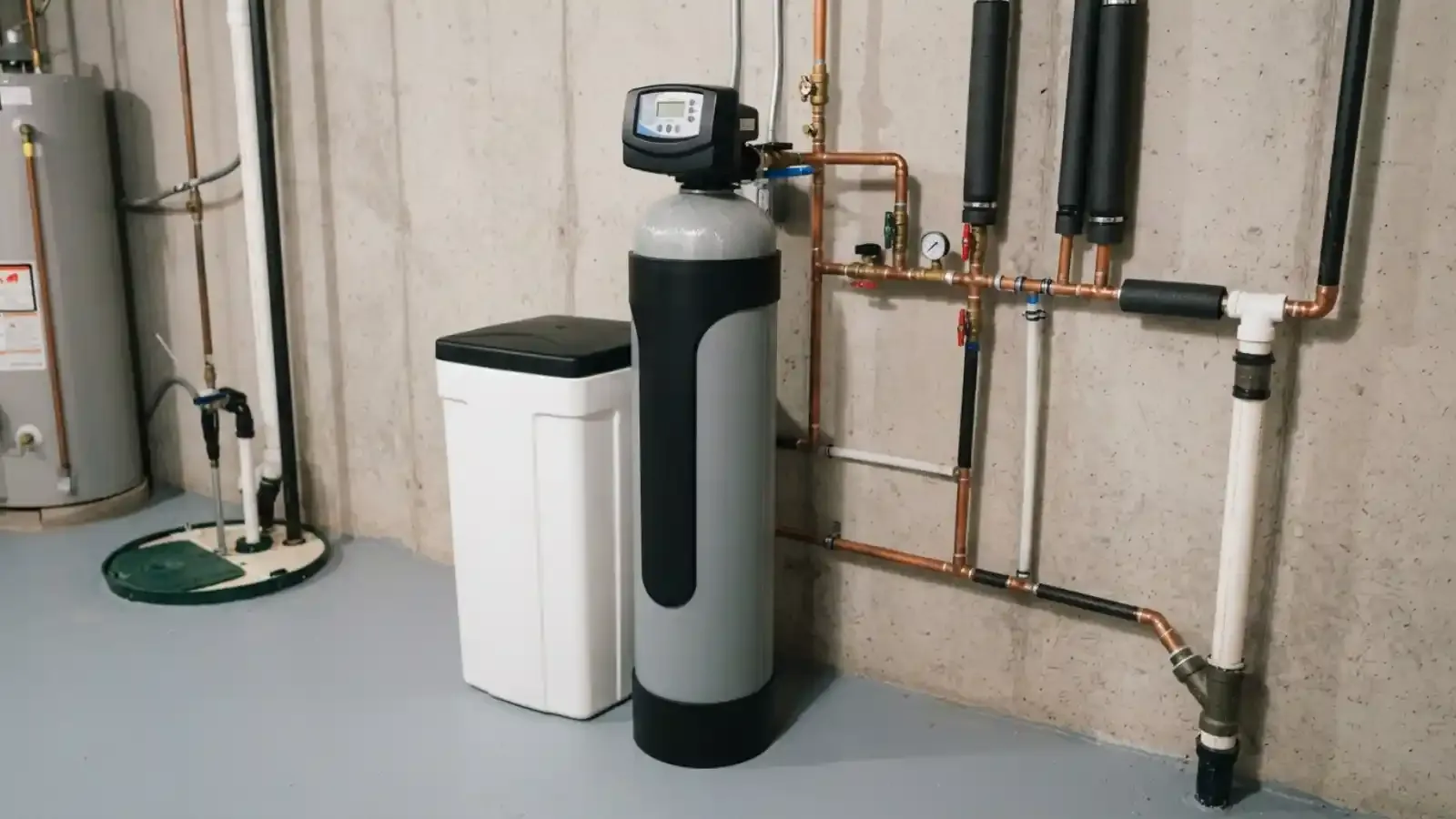
A softener swaps hardness minerals for sodium or potassium and protects pipes, heaters and fixtures. A filter, usually carbon or sediment, improves taste, odor and clarity but leaves hardness alone. A reverse osmosis (RO) system squeezes drinking water through a fine membrane under the sink. We help you pick by starting with what the water is doing and what a test shows.
How hard is the water around Manhattan Beach?
The numbers below come from published utility reports. Bars use a scale to 450 mg/L, so the longest bar is capped at the edge and its real value is in the label.
City of Manhattan Beach 2023 Annual Water Quality Report, roughly 23 grains per gallon. The range reported was 331 to 452.
Treated surface water bought through the Metropolitan Water District. The reported range was 81 to 220, roughly 8 grains per gallon on average.
From Cal Water's 2023 report, roughly 33 grains per gallon. Cal Water classes 300 ppm or higher as very hard. The bar is capped at the scale edge.
Purchased MWD water ranged from 81 to 153 ppm, roughly 7.3 grains per gallon on average.
The tap blend varies. A Manhattan Beach home may get groundwater, imported water or a mix on any given day, and Cal Water serves only portions of some Beach City areas, so check which system serves your address. The honest answer to how hard your water is comes from testing the tap.
Test your tap before spending anything
A few inexpensive checks tell you more than a sales brochure.
Hardness test strips
Strips from a hardware store give a rough reading in minutes. Test the kitchen cold tap on several days, since the blend shifts. Results can be quoted in mg/L, ppm or grains per gallon, and roughly 17.1 mg/L equals one grain.
Ask your water provider
The City and Cal Water publish annual water quality reports with hardness, pH and disinfectant data. Ask which reservoir or well blend serves your block, and whether a lab report is available.
A certified lab
For lead, copper or specific concerns, a state-certified lab gives a number you can trust. The City's 2023 report lists a lead 90th percentile of 4.4 micrograms per liter and says lead and copper come mainly from household plumbing, with flushing the tap for 30 seconds to 2 minutes after the water has sat for hours as the City's advice.
Why do my fixtures crust white and my water heater scale up?
Start from what you see, because each symptom points to a different solution.
White crust on faucets and showerheads
Calcium and magnesium carbonate stay behind when water evaporates. This is classic hardness, and a softener is the usual cure. Wiping with vinegar helps temporarily but does not stop the buildup.
Spots on glasses and dull laundry
Hard water reacts with soap and detergent, so more is needed for the same lather. A softener cuts this. Filters will not.
Scale in the water heater
Scale insulates the burner or elements, shortens tank life and clogs tankless heat exchangers. This is where softening pays off most. See our notes on water heater repair and tankless water heaters for the damage side.
Chlorine taste or odor
The City reports a chlorine and chloramine residual averaging 1.8 mg/L, which is normal disinfection. A carbon filter improves taste. Chloramine often needs catalytic carbon, so check the filter's rating.
Softener vs filter vs reverse osmosis
Here is the honest side-by-side, with what each does and does not do.
| Option | Removes | Does not remove | Upkeep and trade-offs |
|---|---|---|---|
| Salt-based softener | Hardness minerals (calcium, magnesium) | Chlorine taste, most contaminants | Needs salt, uses water to regenerate, adds a little sodium |
| Carbon whole-house filter | Chlorine, some chloramine, odor, some organic taste | Hardness | Cartridges or media need replacing on schedule |
| Sediment filter | Sand, rust flakes, grit | Dissolved minerals and chemicals | Cheap and simple, protects other equipment |
| Reverse osmosis (under sink) | Most dissolved solids, many contaminants at the drinking tap | Not designed for whole-house flow | Wastes some water, filters and membrane need changing |
| Scale inhibitor (template-assisted crystallization) | Changes how scale forms | Does not soften | No salt or drain, results vary by water |
For lead, look for a filter certified to NSF/ANSI 53, for taste NSF/ANSI 42, and for RO NSF/ANSI 58. A label is not the same as a test of your water.
How we approach a treatment install
No one should sell you a softener before knowing your water.
- 1
Read your symptoms and test results
We review the hardness reading, the household size, the fixtures and the complaints. If you have no numbers, we test the tap.
- 2
Pick the equipment that matches
Softener capacity is rated in grains. We match it to your hardness and daily gallons. A filter is chosen for the contaminant, and an RO unit for the drinking tap.
- 3
Install with a bypass and drain
Whole-house units go on the main line with a bypass valve, an air gap or approved drain connection for regeneration, and a nearby outlet. Under-sink RO gets its own faucet and drain saddle.
- 4
Set up and explain upkeep
We program regeneration, show the salt fill and bypass, and give a replacement schedule for cartridges and the RO membrane.
Not sure which one you need?
Describe what you see and taste, and we will say what a test is likely to find.
Softening, honestly: pros, cons and what to ask
A softener can cut scale dramatically and protect water heaters, dishwashers and fixtures. It also uses salt, uses water during regeneration, and sends brine to the sewer. Rules about discharge vary, so ask your city public works whether anything applies to your address before you buy.
Softened water feels slick and some people dislike the taste or want to limit sodium in drinking water. A common fix is leaving the kitchen cold tap on a bypass or adding an RO tap. A softener also does not remove lead, chlorine or bacteria, and it should not be sold as a purifier.
For permits and installation rules on plumbing changes, ask the Manhattan Beach Community Development / building department, and verify any contractor's license at cslb.ca.gov. For larger systems, our plumbing installation team handles the supply and drain work.
Manhattan Beach note
What the City says about Manhattan Beach water
The City of Manhattan Beach supplies a blend of locally pumped groundwater and treated imported water from the Metropolitan Water District via West Basin. The 2023 Annual Water Quality Report says the tap water met all EPA and state primary drinking water standards. pH averaged 7.8 in groundwater and 8.5 in surface water.
Manganese at one raw well exceeded the secondary color standard in 2021, and blending reduces the color issue, with no health risk per the report. In practical terms, hardness and taste are the concerns most households notice, not safety. Neighbors in Hermosa Beach are on a different system with its own report.
Sources: City of Manhattan Beach
What drives the cost of water treatment
Prices depend on the equipment and the plumbing around it. You get a number before work starts.
A whole-house softener, a catalytic carbon filter and an under-sink RO system are different purchases, and capacity matters.
High hardness needs a larger resin tank or more frequent regeneration. Low hardness may not justify a softener.
Space near the main line, a drain connection and an outlet make an easy install. A tight garage or a finished wall adds work.
Brine drain, air gap and bypass valves are part of the job.
Salt, cartridges and membranes are recurring costs, so compare operating cost, not only the install price.
Insurance does not typically cover water treatment equipment. Ask your insurer if a failure damages property.
FAQs
Water softener and filtration questions
Locally pumped groundwater averages 392 mg/L and imported water 136 mg/L, per the City's 2023 water quality report. Your tap gets a blend that varies, so test the tap for a true number.
Not always. A softener makes sense when scale damages the water heater or fixtures. If your complaints are taste or smell, a filter is the better fit.
No. A softener targets hardness minerals. Carbon filters address chlorine and taste, and lead needs a filter certified to NSF/ANSI 53 or an RO system, ideally confirmed by a lab test.
For the kitchen tap, many households like it for taste and low dissolved solids. It wastes some water and needs filter changes, and it is not meant for whole-house flow.
A correctly set softener does not. Poor settings or bypass failures can cause issues. We set the regeneration schedule and test hardness at the outlet.
Yes. Cal Water's Hermosa-Redondo district reports 560 ppm for groundwater and an average 124 ppm for MWD water in 2023, but it serves only portions of some areas, so check which system serves your address.