
Sewer line repair
Repairing the pipe, not just clearing it
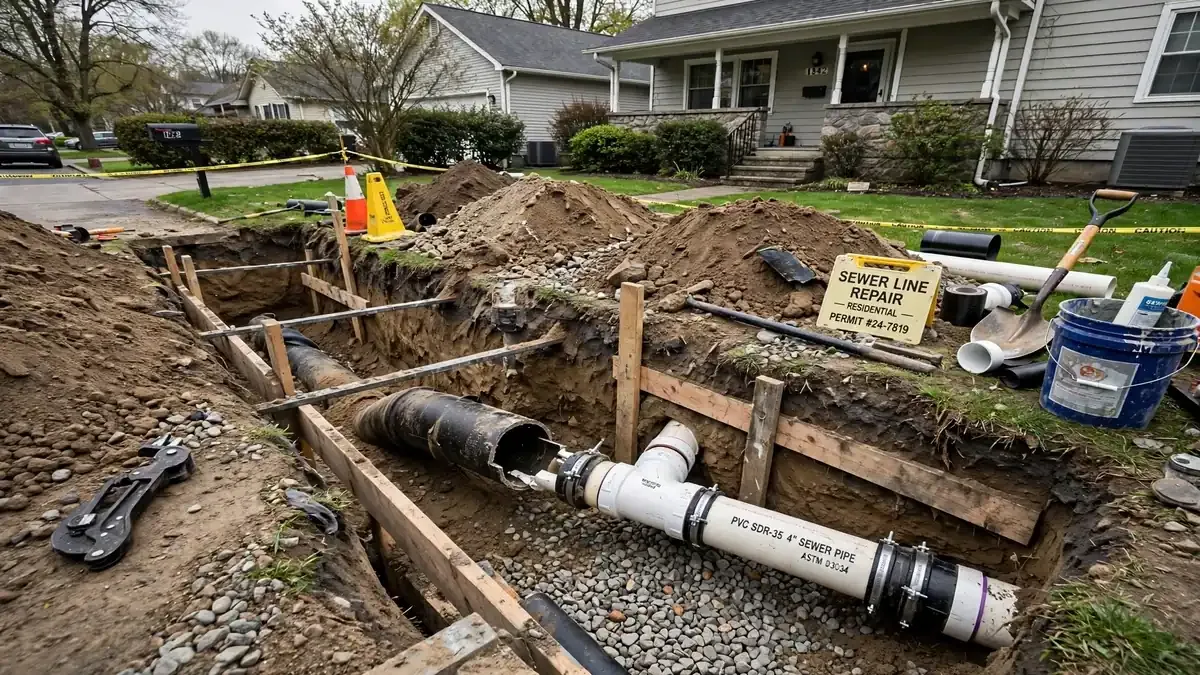
Sewer line repair restores a damaged lateral so it carries waste to the City main without leaking, trapping water or letting roots in. The damage can be a single cracked joint, a stretch where the pipe has sagged and holds water, a section that has shifted out of line or one that has collapsed outright. Cleaning opens a damaged pipe for a while. Repair fixes what keeps closing it.
We repair laterals by two broad routes. Trenchless methods, mainly cured-in-place pipe lining and pipe bursting, work from small access holes. Open-trench excavation exposes the pipe and replaces it. Which one fits depends on what the camera shows, how deep the pipe runs and what sits on top of it.
Manhattan Beach 24/7 Plumbing answers sewer failures at all hours and books same-day appointments when the schedule allows for lines that are leaking or slow but not yet overflowing.
Any sewer repair has to meet the California Plumbing Code, which is based on the Uniform Plumbing Code (UPC), on pipe material, bedding and slope, whether the fix is lining or excavation.
When a sewer pipe failure sends waste into the house or yard
A failed lateral can push sewage into the lowest drain or let it seep into the soil under your yard. Either way, call the 24/7 line right away. After-hours and same-day response is built into how we run sewer calls, because a house cannot function with its waste line down.
Our first move is usually to restore flow by cleaning through the cleanout, and then to camera the line so a repair is based on what we see. Do not wait for daylight if sewage is inside the building.
While you wait for the plumber
- Stop using every toilet, sink, shower and appliance that drains.
- Keep children and pets out of any room or yard area where sewage is visible.
- Do not dig around the suspected break. Hitting a gas, water or electric line is a worse problem.
- Photograph the damage and note when you first saw it for your insurer.
- Clear a path to the cleanout and have the property address and gate access ready.
Signs the pipe is damaged, not just clogged
A clog is something in the pipe. Damage is something wrong with the pipe.
- Clogs return within weeks of cleaning.
A bellied or root-split pipe re-fills with debris quickly, and each cleaning only buys a short delay.
- A cable or jet stops at the same spot.
A hard stop at a repeatable distance can mean a collapse, an offset or a displaced joint, not a soft clog.
- A lush green patch, a soft spot or a sunken area on the lot.
Leaking sewage feeds grass and loosens soil. A depression along the lateral's path is a warning.
- Persistent sewer odor outdoors.
A smell near the lateral's path, with no visible overflow, often points to a leaking joint.
- Gurgling plus rodents or insects.
A broken pipe can give pests an entry route from the soil into the building.
- Slow drains throughout the building after rain.
Groundwater can enter through cracked joints and overload the line during wet weather.
How we confirm a repair is needed
We diagnose before we quote a repair.
- 1
Restore flow
We clear the line through the cleanout with cable or hydro-jet so the camera has a clean pipe to travel. This is also the point where we confirm that cleaning alone will not hold.
- 2
Camera the full run
A push camera with a distance counter travels from the cleanout to the City connection. It records cracks, roots, offsets, bellies, pipe material changes and the condition of each joint.
- 3
Locate and measure
A transmitter on the camera head lets a receiver at the surface find the pipe's path and depth. That tells us where to dig, how deep the pipe is and what the lot allows.
- 4
Present the options
We go over the footage with you, mark the damage on the lateral's length and set out lining, bursting and excavation with their limits. You decide before any work begins.
Manhattan Beach note
Who pays for the lateral, and what the City asks of you
In Manhattan Beach the City maintains most sewer main lines. The lateral from your home or business to the main is the property owner's responsibility under Manhattan Beach Municipal Code 5.36.240. That includes repair or replacement when the lateral fails. Ask City Utilities where your responsibility ends at the main before you plan work.
Before flushing or cleaning your lateral, call the City so crews know. It asks for 24 to 48 hours notice, because extra flow can block the main and cause an overflow. City Utilities is at (310) 802-5304, Monday to Friday, 8:00 to 4:30, and the after-hours call center is (310) 802-5000.
Permit rules vary, so ask the Manhattan Beach Community Development or building department what a lateral repair needs on your property. Wastewater is treated by the Los Angeles County Sanitation Districts.
Sources: City of Manhattan Beach
Pipe lining versus excavation: the trade-offs
| Method | How it works | Strengths | Limits |
|---|---|---|---|
| Spot (point) repair liner | A resin-soaked sleeve is placed over one defect and cured | Small, targeted, little disturbance | Only fits short, isolated damage |
| Full-length pipe lining | A resin-soaked felt tube is cured inside the old pipe | Minimal digging, few access holes | Cannot fix a sag, severe offset or collapse, slightly reduces diameter |
| Pipe bursting | A cone pulls new pipe in while breaking the old | New full-diameter pipe with small pits | Needs entry and exit pits and a clear path, nearby utilities are a concern |
| Open-trench excavation | The old pipe is dug up and replaced | Fixes grade, bellies and collapses, new pipe throughout | Most disruption and restoration, deeper pipe costs more |
No method wins every time. The camera, the pipe depth and what sits on top of the line decide.
Trenchless
How trenchless pipe lining works, and when it is the wrong choice
Cured-in-place pipe lining starts with cleaning. A felt tube saturated with epoxy resin is pulled or inverted into the old pipe from a cleanout or a small access pit. It is inflated against the wall and cured with hot water, steam or UV light. Once hard, it forms a new pipe inside the old one, and a cutter reopens branch connections.
The tradeoffs are real. The liner takes the grade of the old pipe, so a sag stays a sag. A collapsed section stops the tube from passing. A severe offset at a joint can leave a lip. And the finished pipe is a little smaller on the inside, which matters on narrow laterals.
Lining shines when the pipe's grade is sound and the damage is cracks, root intrusion at joints or general wear. It leaves your driveway, planting and hardscape in place, which is why many owners ask for it first.
Excavation
When digging is the honest answer
Open-trench repair is the right tool when the pipe has collapsed, has a belly or has fallen out of grade. It lets the plumber see every foot, reset the slope, replace fittings and install a cleanout where none existed. A common design target for a four inch sewer is about a quarter inch of fall per foot, and a trench is how you restore it.
The costs are disruption and restoration. Depth, shoring, driveway concrete, landscaping and nearby utilities all add work. Before any dig, the site needs a utility mark-out through 811. On a hillside lot, slope and access shape the whole plan, and a tight lot between close neighbors may limit machine access.
Pipe bursting sits in the middle. It replaces the pipe without a full trench, but the entry and exit pits need clear room.
Want the camera footage before you decide?
We show you the damage on screen and explain each option before any work is priced.
How Manhattan Beach lots affect the repair choice
Choices depend on the lot. These are starting points, not rules.
Sand Section and walk streets
Narrow walk streets and closely built lots may limit equipment and make a long trench hard. Trenchless methods are attractive, but a flat lateral that has sagged still may need digging to restore fall.
Hill Section
The lateral drops steeply and runs deep in places. That affects pit depth, shoring and how a liner is installed. The camera locator shows the real depth.
Manhattan Village and commercial lots
Commercial laterals can run under parking lots and drive aisles. Digging means closing lanes and restoring pavement, so liners and scheduling around business hours matter.
Buyers and sellers
Sewer repair in a sale
A lateral problem found in escrow can change a sale. Buyers who run a camera early can ask for a repair credit or a price change, and sellers can fix first to keep the deal moving. The footage is evidence either way.
If you are buying, a planned sewer camera inspection before your contingency window closes is the cleanest way to know what a repair would involve. Your agent can tell you the dates.
What sets the price of a sewer line repair
We state a clear price before work starts. Five things decide it.
A single cracked joint and a 70 foot section are different repairs, and the method may change too.
Shallow pipe is simple to reach. Deep pipe requires shoring and more digging.
Lining, bursting and trenching use different crews and materials. Each has a typical range, and the camera decides which is realistic.
Concrete, pavers, landscaping and irrigation lines on the path add work. Trenchless methods usually reduce this.
Permit rules vary, and any required inspection adds scheduling time. Ask the Manhattan Beach building department what applies to your address.
Homeowners insurance may cover sudden, accidental damage but typically excludes wear, roots and slow deterioration of a lateral. Some policies sell a line coverage add-on. Ask your insurer before work begins.
Rentals
Repairs in rentals, duplexes and multi-unit buildings
When a shared lateral fails, every unit it serves is affected. Owners and managers authorize the work, and tenants need clear notice about water shutoffs. Lining needs less digging than a trench, which helps when a building has to stay in use.
Our crews also serve Lawndale, where you should ask city public works which lateral rule applies at your address. After repair, routine sewer line cleaning on a schedule keeps a repaired line clear.
FAQs
Sewer line repair questions from Manhattan Beach property owners
Yes. Our dispatch line is staffed 24/7. When sewage is entering the building or a collapsed lateral has stopped all drainage, we send a plumber to restore flow first and then camera the line. Same-day appointments are available when the schedule allows for damage that is not yet an overflow.
The lateral from your building to the main is the property owner's responsibility under Manhattan Beach Municipal Code 5.36.240. The City maintains most sewer main lines. If the camera shows the problem is in the main, tell the City.
The City asks you to call before flushing or cleaning your lateral. It requests 24 to 48 hours notice, because extra flow can block the main and cause an overflow. Ask Community Development whether the repair itself needs a permit.
A resin-soaked felt tube is pulled into the cleaned pipe and cured into a hard new lining without digging up the full length. It works best on pipes with sound grade and cracks, root entry or wear. It cannot straighten a sag or open a collapse.
Not always. Lining saves landscaping and concrete and works for many cracked or rooted lines. Digging is better for collapsed, bellied or severely offset pipe. We show you the camera footage and explain which fits.
If the cable stops at a fixed distance, clogs return within weeks or you see a sunken or green patch in the yard, a camera should come before any repair decision. It costs far less than guessing.
Sometimes. Policies often cover sudden, accidental damage but not wear, root damage or slow deterioration. Some offer a service line add-on. Ask your insurer, and keep camera footage and photos.
Permit rules vary by city and by scope. Ask the Manhattan Beach Community Development or building department about your address before work starts.