
Planned work
Is it time to replace the pipes?
Pipes do not announce their retirement. They hint. A pinhole leak here, rust-colored water there, a shower that has gradually weakened. Any one of these can be fixed alone. When they pile up, the economics change, because each spot repair costs a visit, opens a wall and leaves the rest of the line unchanged.
That is the point where repiping becomes the sensible conversation. We walk you through what the symptoms mean, what a repipe involves and whether a partial replacement would do the job.
A repipe is governed by the California Plumbing Code, based on the Uniform Plumbing Code (UPC), which sets which pipe materials, sizes and supports are allowed for potable water.
Three symptoms that point to the pipes themselves
We start from what you notice at the tap, because that is how most repipe decisions begin.
- Discolored water
Brown, yellow or orange water, especially first thing in the morning, often means iron rust from galvanized pipe. Blue-green stains around fixtures point to copper corrosion. Run the cold tap for a minute: if it clears, the pipe is shedding, not the supply.
- Low pressure that never recovers
Galvanized steel scales on the inside until the opening is a fraction of its original size. Aerators and fixtures may be fine while the pipe behind them is choking.
- Pinhole leaks
A damp spot, a stain on the ceiling or a bill that creeps up, followed by another pinhole a few feet away. Pitting along the length of copper means one repair will not hold.
If you are unsure whether the problem is a single leak or a failing system, our leak detection team can confirm the source before you commit to replacing anything.
PEX or copper: the real trade-offs
Both materials are accepted for residential supply in California where the local code permits them. Which is better depends on the house, the water and your preferences.
| Factor | PEX | Copper |
|---|---|---|
| Install method | Flexible tubing pulled through walls with fewer joints. Connections use crimp or expansion fittings. | Rigid lengths joined with soldered or press fittings at every turn. |
| Wall access | Often needs smaller openings because it bends around framing. | Needs straighter paths and more joints, so usually more openings. |
| Corrosion | Does not pit or corrode. | Can pit over time depending on water chemistry. |
| Heat and sun | Must be kept out of direct sunlight and away from certain heat sources. | Handles heat and sun, and does not degrade outdoors. |
| Noise and freezing | Flexes and generally tolerates a freeze better than rigid pipe. | Can transmit water hammer, and splits when frozen. |
| Lifespan and perception | Newer, with a track record still being written in real homes. | Decades of use, and some buyers prefer it. |
| Where it shines | Whole-home repipes where walls are costly to open. | Exposed runs, higher heat areas and owners who want metal. |
Local code and the building department decide what is accepted on your project. Ask the Manhattan Beach Community Development department what applies, and we will follow it.
What a whole-home repipe involves
The work is organized so the house is usable as much as possible, and it follows a set order.
- 1
Walk-through and route plan
We look at where water enters, the water heater, each bathroom, the kitchen and the laundry. We decide the manifold or trunk layout and mark where walls and ceilings will need access.
- 2
Shutoff and rough-in
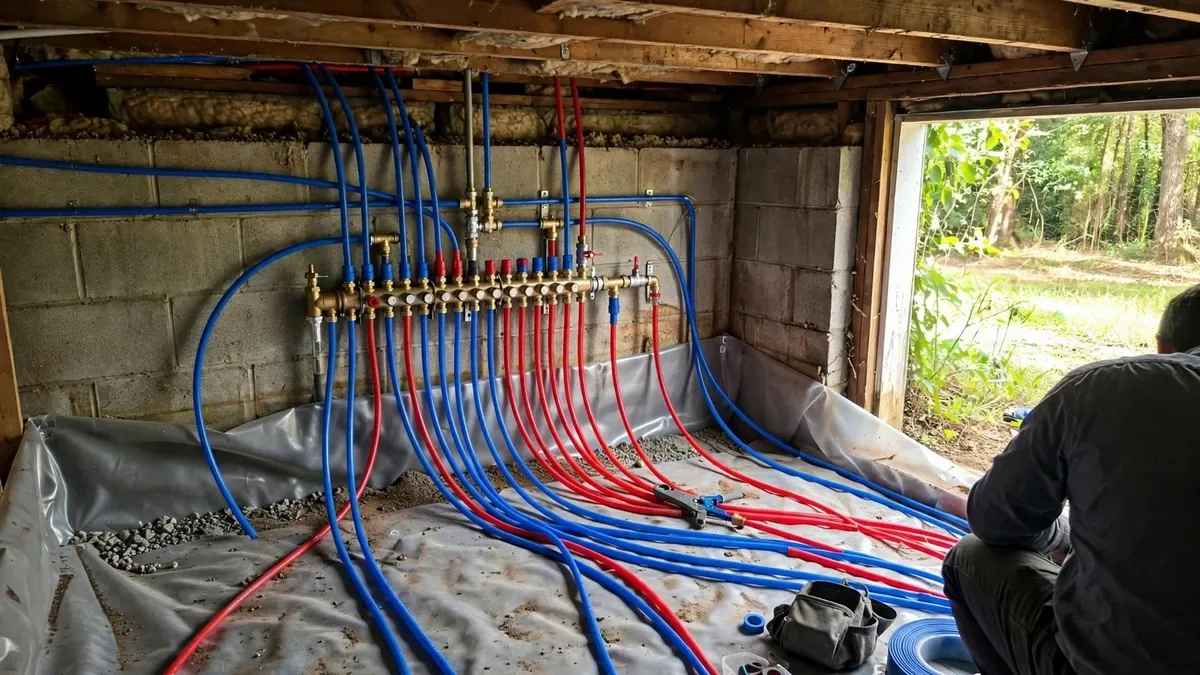
We shut the water off, drain the old system and set the new main run. We then run new lines to each room through the walls, attic or crawlspace, one zone at a time.
- 3
Connect fixtures and test
Each fixture is connected, and the system is pressure tested before any wall is closed. A pressure regulator and expansion tank are checked or replaced as part of the set-up.
- 4
Close up and restore
We cap off the old lines, close access holes and flush the system. Patching drywall, texture and paint may be a separate trade, so we spell out who does what.
Sequencing and wall access
The order matters because water is off while pipes are connected. We plan to restore water to bathrooms and the kitchen as each zone is finished, so you are not without water for the entire job. Plan on some shutoff periods and a temporary arrangement for a day or two, such as a nearby toilet or bottled water.
Wall access is the part people worry about. PEX can often be fed through small holes cut at the top and bottom of a wall. Copper needs more openings because rigid pipe cannot turn corners. Tile, plaster and finished stone add cost, so we try to route through closets, attics, crawlspaces and the garage. If your home has a second floor, we plan the vertical runs together.
Want a clear route before you commit?
A walk-through shows the wall access and the pipe condition, and you leave with a plan.
When partial is enough
Repiping one bathroom or one line
Not every case needs the whole house. If the damage is limited to a bathroom, a kitchen run or the line from the heater, a partial replacement may be the efficient answer. We say so plainly when the rest of the pipe looks sound.
If the pipe is failing under a concrete floor, the alternative to breaking the slab is a reroute through walls or the attic. Our slab leak repair page lays out those options. If the failing pipe is the one outside, that is a separate job covered under water line repair.
What drives the price of a repipe
More fixtures and more floors mean more pipe and more connections.
PEX and copper differ in material cost and labor time.
Finished surfaces, tile and plaster take more care to open and repair.
Many owners replace shutoff valves, angle stops, the regulator and expansion tank at the same time.
Drywall, texture and paint are often scoped separately. Ask what is included.
Insurance usually does not pay for a planned repipe due to age or corrosion, but may help with the water damage from a sudden burst. Ask your insurer and keep records of any leaks.
Manhattan Beach note
What the City's water report says about your plumbing
The City's 2023 Annual Water Quality Report reports a blend of local groundwater and treated imported water. Groundwater hardness averaged 392 mg/L as calcium carbonate, which is roughly 22.9 grains per gallon, while imported water averaged 136 mg/L. Hard water leaves scale on the inside of pipes and heaters, which is one reason a softener or filter often comes up during a repipe.
The same report says lead and copper at the tap come mainly from corrosion of household plumbing, and the City cannot control the materials in your home. It advises flushing the tap 30 seconds to 2 minutes when water has sat for several hours. If your home has old pipes, replacing them is one way to address that. Ask the City if you have questions about your tap water.
Sources: City of Manhattan Beach
FAQs
Repiping questions
One leak in an otherwise sound system is a repair. Several pinholes, discolored water on many fixtures or pressure that has dropped everywhere suggest repiping. We look at the pipe and tell you honestly.
Both are accepted for residential supply where local code allows. PEX does not corrode and installs with fewer wall openings. Copper handles heat and sun and is preferred by some owners. The table above compares them.
It depends on house size and access. We give a schedule after the walk-through and plan water restoration zone by zone.
Some openings are usually needed. PEX often needs smaller ones than copper. We try to route through attics, crawlspaces and closets and tell you where the openings go.
Usually yes, with planned water-off periods. Some owners arrange to stay elsewhere for a night or two.
Permit rules vary. Ask the Manhattan Beach Community Development department before work starts.
Yes. The same 24/7 line answers burst and leak calls. If your old pipe has just failed, see our burst pipe repair page for shutoff steps.