
Drain cleaning
What drain cleaning actually is
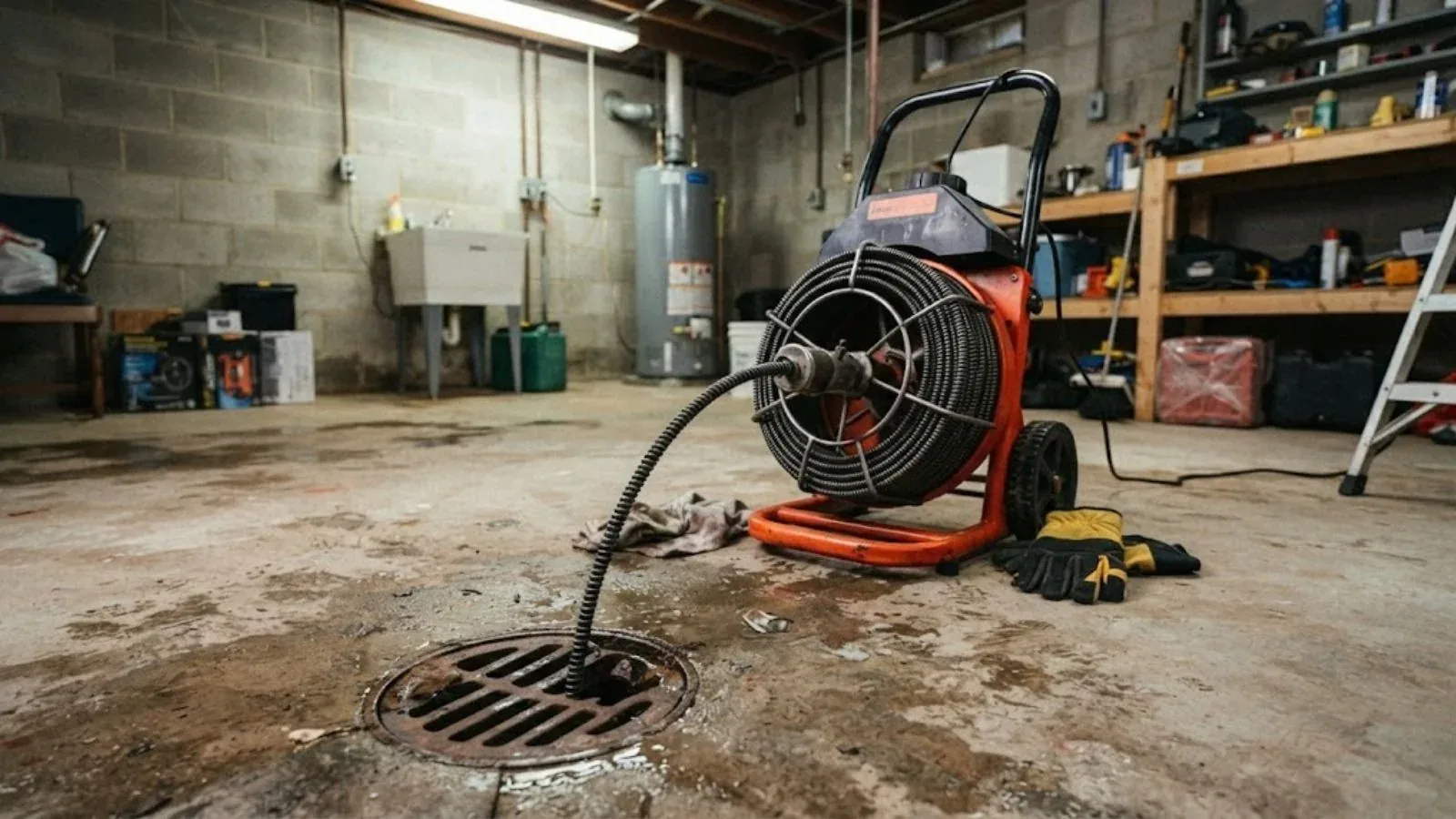
Drain cleaning is the removal of whatever is narrowing or blocking a drain line. That might be grease in a kitchen branch, hair and soap in a tub trap, or roots in the pipe that runs from your building to the street. The tool depends on the material. A cable machine breaks through or hooks the blockage, and a hydro-jet nozzle scours the pipe wall.
Manhattan Beach 24/7 Plumbing takes clogged drain calls at every hour, from one bathroom sink to a main line pushing water back out of a floor drain. Our licensed plumbers quote a clear price before work starts, and same-day appointments are available when the schedule allows.
This page covers the three jobs people search for most: the clogged drain you can see, drain snaking, and main line clogs. Each has its own tools, its own limits and its own warning signs.
Drain and vent sizing in California follows the California Plumbing Code, which is based on the Uniform Plumbing Code (UPC), and that is why a plumber looks at venting when a drain keeps gurgling instead of only pushing a cable through it.
Why it happens here
Why drains clog the way they do in Manhattan Beach
Lots here are not alike. In the Sand Section the ground is nearly flat, so a sewer lateral has little fall and a wad of grease or a root hair can sit for months before anything backs up. On the Hill Section the pipe drops steeply, water can outrun the solids, and paper and wipes get left behind at the first bend. Both end in the same call, but the fix differs.
Water chemistry plays a part too. The City's 2023 Annual Water Quality Report lists groundwater at an average of 392 mg/L total hardness (roughly 23 grains per gallon) and imported water at 136 mg/L, and the blend at your tap changes by the day. Hard water leaves scale on pipe walls and turns soap into a sticky curd, which gives hair and grease a rough surface to cling to.
Then there is the sewer lateral. The City maintains most sewer mains, but the lateral from your building to the main belongs to the property owner under Manhattan Beach Municipal Code 5.36.240. A clog in the lateral is yours to clear, and the City asks for notice first. The details are in the Manhattan Beach note further down.
Signs your drain needs more than a plunger
Where the water misbehaves tells you how deep the clog sits.
- One fixture drains slowly.
A single sink or tub that gurgles and empties in a lazy spiral usually has a partial clog in its own trap or branch. A cable or a trap cleaning often fixes it.
- Two or more fixtures slow at once.
When the shower and the toilet on the same floor both struggle, the clog is past the branches, in the shared drain or the main line.
- Gurgling after you run water elsewhere.
Air pushed ahead of the water has nowhere to go. A washer draining and a toilet burping at the same time is the classic version.
- Water or sewage in the lowest drain.
A floor drain, shower pan or ground-level tub that fills when you flush upstairs points to a main line blockage. Treat it as urgent.
- A sewer smell with no visible leak.
A dry trap can cause it. A smell that arrives with slow drains often means a partial blockage is holding waste in the line.
- Clogs that keep returning.
If the same drain stops every few weeks after clearing, something is growing, pooling or broken further down. Cable alone will not solve it, and a camera should come next.
When a clogged drain is an emergency: sewage coming up
If sewage is rising in a floor drain, tub or toilet, or wastewater is backing into a bathroom, call us now. Our 24/7 dispatch line takes these calls at night and on weekends, and after-hours or same-day visits are how we handle a house that cannot hold its waste water until Monday.
A backup is wastewater, not clean water. Keep children, pets and bare hands away, and do not run anything that drains until the line is open. Every flush or laundry load sends more into the lowest opening.
While you wait for the plumber
- Stop using every sink, toilet, shower, dishwasher and washing machine in the building.
- Find the cleanout, usually a capped pipe near the foundation or in a side yard, and leave the cap closed unless the plumber tells you otherwise.
- Move rugs, boxes and electronics away from the affected drain and keep people and pets out of the room.
- If water is coming up outside or you suspect the City main, call the City's after-hours call center at (310) 802-5000 and tell them what is happening.
- Do not pour chemical drain cleaner into a standing backup. It sits in the pipe and burns whoever opens it next.
Which drain is blocked? Reading the pattern
| What you notice | Likely location | Typical first move |
|---|---|---|
| One sink or tub is slow | Fixture trap or its branch | Cable or trap cleaning, usually quick |
| Kitchen sink and dishwasher back up together | Kitchen branch, often grease | Cable with a cutter head, then a hot flush or jet |
| Bathroom sink, tub and toilet all slow | Shared branch or stack base | Heavier cable through a cleanout or the toilet flange |
| Laundry standpipe overflows | Laundry line or its junction with the main | Cable the standpipe, camera if it repeats |
| Floor drain or lowest tub fills | Main line past the last branch | Cleanout access, then cable or hydro-jet and a camera |
| The clog returns within weeks | Roots, a belly or a slipped joint | Camera inspection before more clearing |
If your pattern is not on this list, describe it when you call. The order in which fixtures fail often points to the exact stretch of pipe.
How we find and clear the clog
Four steps, in this order, on most calls.
- 1
Read the pattern
We ask which fixtures are slow, in what order they failed and what has gone down the drain lately. Then we check the cleanout and the reachable traps so we know where the tool should enter.
- 2
Clear it with the right tool
A drum machine with a small cable handles sink and tub branches. A sectional machine with a heavier cable and a cutter head reaches the main line. Heavy grease and scale call for a hydro-jet nozzle instead.
- 3
Run the camera
Once water moves, a drain camera on a push rod shows the pipe wall. Roots, a crushed section, a low spot holding water or a slipped joint all appear on the monitor. This step separates a one-time clog from a pipe that needs work.
- 4
Test and explain
We run water, flush fixtures and watch the cleanout to confirm full flow. You get a plain account of what was in the line and what we suggest next, with the price stated before any added work starts.
Clogged drain, fixture by fixture
Each fixture clogs for its own reasons.
Kitchen sink
Grease, coffee grounds and food solids set into a cement-like plug beyond the P-trap. A disposal grinds food but does nothing to stop fat from hardening downstream. If the disposal hums and nothing moves, that is a separate repair.
Bathroom sink and tub
Hair wraps around the pop-up stopper assembly and packs into a mat in the trap. Pulling the stopper often shows the whole problem. Deeper clogs need a small cable run through the trap arm or the overflow.
Toilet
A toilet that clogs once usually had a bad flush. One that clogs repeatedly may have a partial blockage in the closet bend or the branch behind it, or a flange problem. Wipes marked flushable do not break down like toilet paper.
Floor drain and laundry
Garage and laundry floor drains collect lint, soap and grit, and they often tie straight into the main. A drain that fills during a wash cycle points to a clog downstream of the standpipe.
Drain snaking
Drain snaking: what it does and where it stops
Drain snaking pushes a rotating steel cable into the pipe until it meets the blockage. A cutter head chews through soft material like hair and paper, while a hook or corkscrew head retrieves wads of fiber or a dropped toy. Cable diameters run from roughly a quarter inch for a sink to three quarters of an inch or more for a main line.
Snaking is fast and works well on fresh clogs. Its limit is that a cable only opens a hole through the blockage. Grease still coats the pipe wall, and roots grow back into the cut. If the cable stops at the same distance every visit, or the clog returns inside a month, the line probably needs a camera, a jet, or both.
Scouring the full pipe wall is the job of high-pressure water jetting, which we use when a cable only buys a few weeks.
Main line clogs
Main line clogs: when the whole building is affected
The main line is the three or four inch pipe that carries everything from the building out to the City main. When it clogs, the lowest fixtures fail first because that is where backed-up water finds an opening. You may see a toilet bubble when the washer drains, or water standing in a ground-level shower.
Common causes are roots entering at a joint, a belly where the pipe has settled and holds water, grease mixed with paper, and a collapsed or offset section. Roots matter most on lots with mature trees. A second unit or a rented garage apartment tied to the same lateral adds load and leaves the pipe less room for error.
Clearing a main usually starts at the cleanout. Because the lateral is the owner's responsibility, the City asks to hear from you 24 to 48 hours before you flush or clean it. If the line is already backing up in your house, do not hold the call to us for that window. Tell the City what is happening and start the clearing.
Backup in progress, or a drain that keeps returning?
Tell us which fixtures are slow and we will line up the right tool.
Cable, jet or camera: choosing the method
| Method | Best for | Limit |
|---|---|---|
| Hand auger or drum machine | A single sink, tub or shower | Short reach, does not clean the pipe wall |
| Sectional cable with cutter | Main line roots and compacted waste | Leaves a grease film, roots regrow |
| Hydro-jet nozzle | Grease, scale and silt along the full pipe wall | Wrong tool for broken or collapsed pipe |
| Drain camera | Finding out why a clog repeats | Shows the problem but does not clear it |
| Spot repair or relining | Cracks, offsets and bellies seen on camera | Needs a repair plan, not a cleaning |
When the camera finds damage instead of debris, the answer is sewer line repair and not another round of cleaning.
What affects the price of drain cleaning
We give a clear price before work starts. These are the factors that move it.
A trap-level clog is a short job. A blockage 60 feet down a lateral takes more cable, more time and sometimes a second tool.
An outside cleanout is easy. With none, the plumber may have to pull a toilet or work through a roof vent, which adds time. Installing a cleanout can solve the problem for good.
A cable run, a hydro-jet pass and a camera inspection use different equipment and labor, and many jobs need two of them.
Hair in a trap is routine. Roots, a belly or a collapsed section may need a repair quote once the line is open.
A night or holiday visit, a shared multi-unit drain and a restaurant line full of grease each change the scope, so say which applies when you call.
Homeowner policies often cover sudden damage, and a water backup endorsement is sometimes an optional add-on. Routine clogs and wear are usually not covered. Ask your insurer before you assume either way.
Rentals and commercial
Rentals, multifamily buildings and restaurant kitchens
In a duplex, condo or small apartment building the drain may be shared, so the clog can sit in a line that several households use. Owners or managers usually authorize the work. Tell us whether you are the tenant, owner or manager and where the building cleanout is, and the visit will go faster. Property managers in Hermosa Beach and across the Beach Cities reach the same dispatch line.
Restaurants and cafes have their own problem: grease. Kitchen lines and floor drains clog from fat that cools and hardens, and a grease interceptor, if the property has one, needs its own upkeep. When the job goes past one drain, it falls under commercial plumbing.
Before you reach for the bottle
What not to pour down the drain, and when to stop DIY
Store-bought chemical cleaners are a gamble. Caustic products can sit on a standing-water clog and heat the pipe, and they leave hazardous liquid for whoever opens the trap next. They do little against grease further down the line or against roots.
A plunger and a trap cleanout are fair first steps for a single sink or toilet. Stop when more than one fixture is affected, when sewage appears, or when a rented cable stops and will not advance. Forcing a cable against a hard stop can kink it or damage the pipe.
To keep the line open, use a strainer in tubs and showers, scrape pans into the trash before washing, and keep wipes, paper towels and cotton out of toilets even when the package says flushable.
Manhattan Beach note
The City's sewer rule and what it means for your clog
The City maintains most sewer main lines in Manhattan Beach. The lateral from the building to the main is the property owner's responsibility under Manhattan Beach Municipal Code 5.36.240. Before flushing or cleaning your lateral, call the City so crews know. It asks for 24 to 48 hours notice, because extra flow can block the main and cause an overflow.
The City Utilities office is at (310) 802-5304, Monday to Friday, 8:00 to 4:30. The after-hours call center is (310) 802-5000. Wastewater is treated by the Los Angeles County Sanitation Districts. For a planned clearing, such as a repeat clog you already know about, make the call a couple of days ahead.
Sources: City of Manhattan Beach
FAQs
Drain cleaning questions from Manhattan Beach homes and businesses
Yes. The dispatch line is staffed 24/7. Sewage backing up, a toilet overflowing with no sign of stopping and a floor drain that fills when you flush are the calls we treat as urgent. Tell the dispatcher which fixtures are affected and whether the water is still rising.
Slow drains that have not yet overflowed get same-day appointments when the schedule allows. For overnight or weekend visits, ask about the after-hours price when you call so it is clear before work starts.
A snake is a rotating cable that cuts or hooks the blockage and opens a channel. Hydro jetting sends high-pressure water through a nozzle that scours the pipe wall along its full length. Snaking suits fresh clogs, and jetting suits grease, scale and clogs that keep coming back.
The City of Manhattan Beach asks for it. Call before flushing or cleaning your lateral, with 24 to 48 hours notice where you can, because extra flow can block the main and cause an overflow. The Utilities office is open Monday to Friday, and the after-hours call center covers emergencies.
The lateral from your building to the main is the property owner's responsibility under Manhattan Beach Municipal Code 5.36.240. The City maintains most of the main lines. A camera run shows which side of the connection the blockage is on.
Yes, in most cases. The camera shows roots, grease buildup, a low spot holding water, a cracked or offset joint and foreign objects. It turns a guess into something you can see on the monitor, which is why we use it on any repeat clog.
Usually not, and it can make the visit harder. The product sits in the pipe and can burn skin when the trap is opened. Stop running water, and use a plunger only on a single fixture with no sewage showing.
Run a different fixture. If only one drains badly, the clog is in that fixture's trap or branch. If several fail together or the lowest drain in the building fills, it is the main line.
Yes. Tenants, owners and property managers all call us. For shared drains and restaurant lines we need to know who authorizes the work and where the cleanout is. Grease-heavy lines often need a hydro-jet pass as well as a cable.