
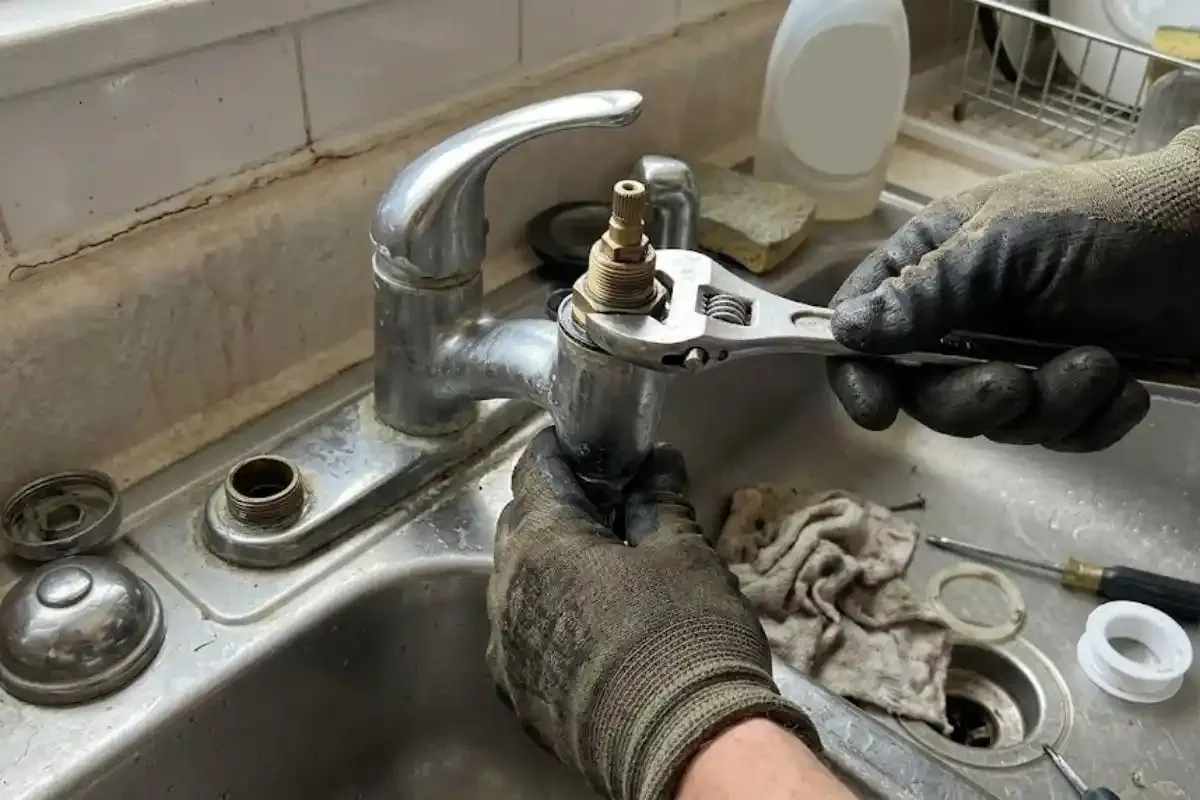
Faucet and sink repair
What faucet and sink repair actually involves
Faucet repair is the replacement of the worn internal parts that control water flow, usually a cartridge, a ceramic disk assembly or a set of seats and springs, along with the seals that keep water inside the body. Sink repair is the same idea for the basin side: the drain assembly, the trap, the flexible supply lines and the shutoff stops.
Most faucets fail at the valve, not the spout. The finish stays shiny while the rubber O-rings inside harden, the cartridge scores, or mineral crust builds on the seat. That is why a faucet that looks fine can still drip, hiss or weep from the base of the handle.
We repair a faucet when parts are available and the body is sound. We replace it when the finish is flaking, parts are no longer made, or repair would run close to the cost of a new one.
Faucet and supply connections are covered by the California Plumbing Code, based on the Uniform Plumbing Code (UPC), which is one reason replacement faucets and supply stops should be approved, listed parts.
Know your valve before you buy parts
Four internal designs cover almost every faucet in a house. Which one you have decides the fix.
Compression
The old two-handle type. A rubber washer presses on a seat, and a drip means a worn washer or a pitted seat. Cheap to fix, and handles keep turning many times past closed.
Ball
A single lever on a rotating ball, common in kitchens. It has several small springs and seals, and a repair kit usually replaces the lot.
Cartridge
A sealed insert that slides or rotates in the body. Replacing it solves most single-handle drips, but it has to match the brand and model exactly.
Ceramic disk
Two polished ceramic plates slide against each other. They last longest, but grit or scale can scratch them, and then the whole cylinder gets replaced.
Not sure which one you have? Send us the brand stamped on the body, or just leave the handle off and we will identify it.
When a faucet will not shut off, or a sink line is spraying
A faucet that will not close, a supply line that has split, or a stop valve that is spraying at the stem is a flood risk, and it does not wait until morning. Our dispatch line works 24/7, and a same-day visit is usually possible when the schedule allows.
The first minute matters most. Turn the stops under the sink, and if they will not move, go straight to the main shutoff.
While you wait for the plumber
- Turn both small oval stops under the sink clockwise by hand. Hot is on the left, cold on the right.
- If a stop is seized or leaks when turned, leave it and close the main water shutoff to the house.
- Open a lower faucet, such as a tub, to drain pressure from the line.
- Place a bucket under any leak and lay towels across the cabinet floor.
- If water reached an outlet or a light fixture, turn off the breaker for that room before you touch anything.
Signs the faucet needs work, ranked by how soon
Drips tell a story. Here is what each one usually means.
- Drip from the spout when closed.
The cartridge, disk or washer is worn. A steady drip can waste several gallons a day, and you pay for every one of them.
- Water at the base of the handle or spout.
The O-rings on the body have failed. Tightening the cap rarely lasts more than a week.
- Weak or sideways spray.
Mineral scale is clogging the aerator, the screen at the tip. Unscrew it and soak it in vinegar. If the flow stays weak, the problem is further back.
- Hot and cold mix together when the handle is off.
A damaged cartridge or a check stop is letting water cross over. That can send hot water into the cold line.
- Dampness or a green crust inside the cabinet.
A slow leak at the supply connection or the stop valve. Wood swelling and a musty smell mean it has been going a while.
- A handle that is stiff, loose or gritty.
Corrosion or mineral buildup inside the valve. Forcing it can snap the stem.
Manhattan Beach note
Salt air and hard water on Manhattan Beach fixtures
Coastal homes see more corrosion on exposed metal. Fixtures near open windows, outdoor showers and patio sinks can pit and flake in salt-laden air, and chrome plating that starts to peel is a sign the base metal is exposed. We suggest solid brass bodies and a stainless or PVD finish for any fixture used outdoors, and we will tell you if a faucet has reached the point of replacement.
The City's 2023 Annual Water Quality Report gives groundwater hardness at an average of 392 mg/L, or roughly 23 grains per gallon, with imported surface water far softer at about 136 mg/L. The mix at your tap changes, but the harder days leave white scale on aerators and cartridges. Cleaning an aerator every few months is the simplest habit that prolongs a faucet.
Sources: City of Manhattan Beach
How a faucet repair goes
A normal visit moves in four moves, and you see the problem part before we install the new one.
- 1
Close the stops and take it apart
We shut the stops, open the faucet to relieve pressure, and remove the handle, trim cap and retaining nut. A towel in the drain keeps small parts out of the trap.
- 2
Look at the worn part
We check the cartridge, the seals and the seat, and we read the model number so the replacement is correct.
- 3
Replace and flush
The new part goes in, the aerator comes off, and we run both lines for a few seconds to push out debris.
- 4
Test every connection
We check the stops, supply lines and drain for weeping with the water on, then run it hot and cold to confirm the fixture closes completely.
Which parts we replace, and when the whole faucet goes
The honest answer depends on what is worn and how old the fixture is.
| What failed | Typical fix | Replace the faucet when |
|---|---|---|
| Cartridge or ceramic disk | New cartridge matched to the model | Parts are discontinued |
| O-rings at the spout base | New seal set | The swivel body is pitted |
| Aerator | Clean or replace the screen | Never, a new aerator is cheap |
| Supply stop or line | New quarter-turn stop and braided line | The valve is seized in the wall |
| Corroded finish | Not repairable | Chrome is flaking or the body leaks |
| Pull-down hose or sprayer | New hose and weight | The diverter inside fails |
Old multi-turn stops under a sink are a reason to book a visit. A stop that has not moved in years often will not shut off at all the day you need it.
Drip you cannot ignore any longer?
Tell us the faucet type and what it does, and we can arrive with the likely part.
Under the sink
Sink repair: drains, traps and the cabinet floor
A leak in the cabinet is as often from the drain as from the faucet. The slip nuts on the P-trap loosen with use, the plastic tailpiece cracks, and the basket strainer seal dries out. A slow drip into the cabinet rots particleboard in a season.
A sink that drains slowly may need a hand cleaning of the trap, or a drain cleaning visit with a cable if the blockage is further down. If the garbage disposal is the one dripping, see our page on garbage disposal repair. Swapping a vanity faucet along with a new sink, a bar sink or a laundry tub is also a job we take, and larger remodels fall under plumbing installation.
What affects the price of a faucet or sink repair
You get a clear price before work starts. These are the things that move it.
A cartridge swap costs less than a new faucet, which in turn depends on the fixture you choose.
Common brands are quick. Specialty or imported fixtures can need ordering.
Seized or leaking stops add a valve replacement to the job and may need the main shutoff.
A tight vanity, a wall-mounted spout or a tub deck set takes longer than a plain kitchen faucet.
An evening or weekend emergency visit has a different rate than a scheduled daytime visit.
Insurance often responds to a sudden supply line burst and the water damage that follows, but not to a faucet that has dripped for months. Check your policy and photograph the damage.
FAQs
Faucet and sink repair questions
Yes. A faucet that will not shut off, or a supply line that is spraying, gets priority on the 24/7 line, and a same-day visit is usually possible. Close the stops under the sink first.
If the body is solid and the parts are available, a cartridge or disk swap is the smaller job. A flaking finish or a pitted body points to replacement.
Usually debris in the aerator or a partly closed stop. If the aerator is clean, the stop or the supply line has a restriction.
Salt in coastal air can corrode exposed metal, especially outdoors. Solid brass and a sealed finish hold up better. Indoor faucets near open windows can show it too.
They are supply stops, one for hot and one for cold. A quarter-turn type is easier to trust than an old multi-turn one that has not been moved in years.
Yes. We will check the hole spacing and supply type before the visit. Keep the box and the instructions.