
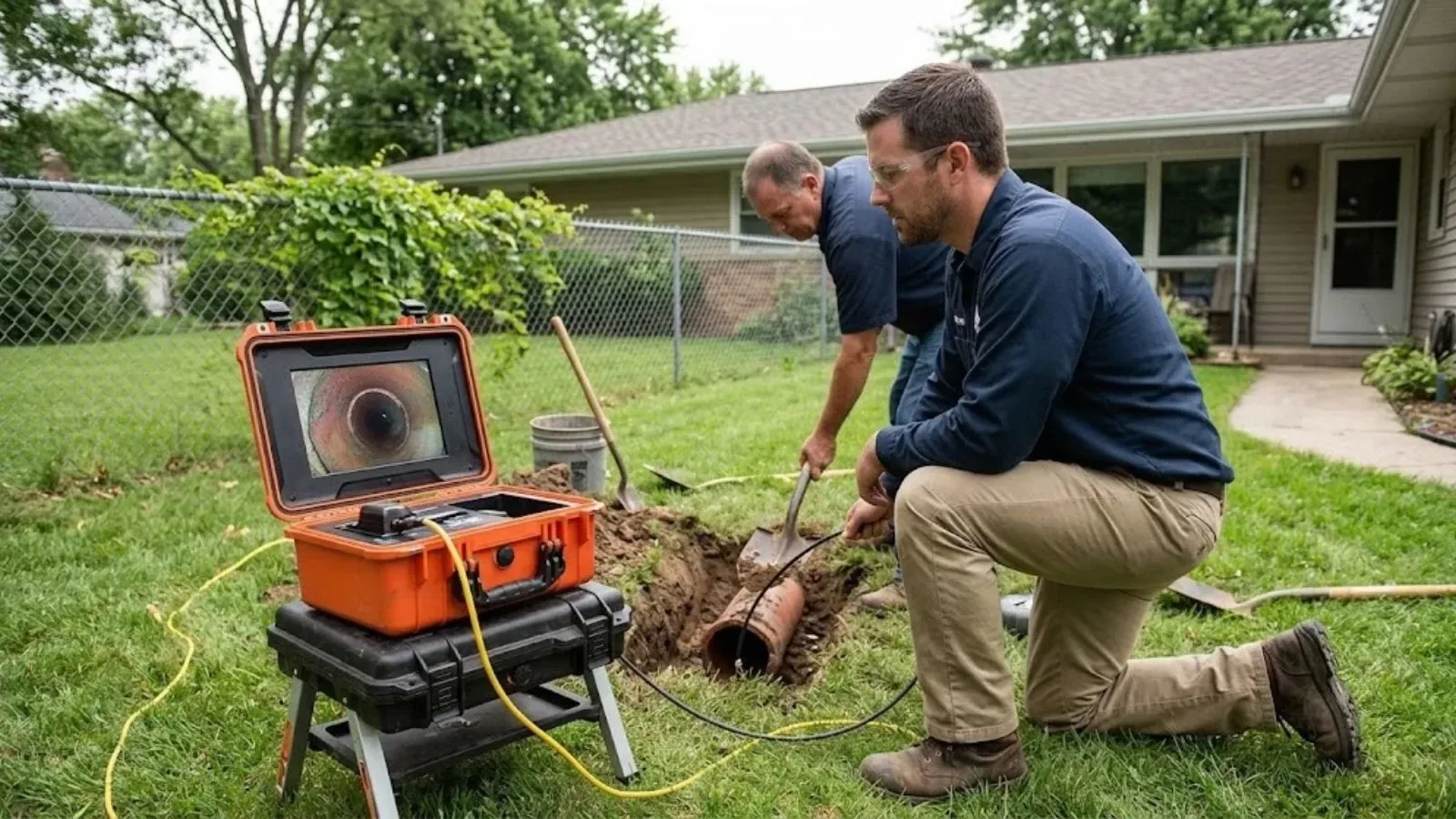
Sewer camera inspection
A look inside the one pipe you cannot see
A sewer camera inspection is a visual survey of your sewer lateral, the buried pipe that carries waste from the building to the City main. A technician feeds a waterproof camera head on a flexible push cable through the cleanout. The monitor shows the inside of the pipe in real time, and a counter on the cable reports how far in the camera has traveled.
This is a planned service, not a rescue call. People book it to know the condition of a lateral before they buy, sell, remodel or pay for repairs. If you are looking at a live backup, our emergency sewer line cleaning is the faster route, and we run the camera afterward.
Manhattan Beach 24/7 Plumbing schedules inspections around your calendar, with same-day appointments when available.
What a camera inspection finds is judged against the California Plumbing Code, which is based on the Uniform Plumbing Code (UPC), for slope, joints and materials, and against the pipe's actual condition.
Who books a sewer camera inspection
Reasons vary, but each one is about deciding with facts.
Buyers in escrow
Sewer problems can cost a lot to fix and are invisible at a showing. Footage lets you ask for a credit, a repair or a different price before contingencies end.
Sellers
A clean video before listing answers buyer questions early. If the pipe is damaged, you choose the repair on your timetable.
Owners with repeat clogs
When the same drain keeps backing up, footage shows the cause. It may be roots, a sag or buildup, and each points to a different fix.
Remodelers and landscapers
Before a new addition, hardscape or large tree, you want to know where the lateral runs and how healthy it is.
Property managers
For duplexes and small apartment buildings, a recorded survey helps plan maintenance and documents condition when ownership or tenants change.
Owners of older properties
If you do not know what the lateral is made of or when it was last checked, a camera answers both.
What happens during the visit
Most inspections follow this sequence.
- 1
Locate the access point
We find the cleanout, or pull a toilet if there is none. Keep water use light while we work.
- 2
Run the camera
The head travels toward the City main, with a light and a self-leveling lens so the picture stays upright in the pipe. We pause at anything unusual and record it.
- 3
Locate depth and path
A transmitter in the camera head lets a receiver at the surface mark the pipe's route and depth. Those marks matter if repair or a new structure is on your mind.
- 4
Review the footage
We go through the recording with you, point out each defect with its distance from the cleanout and explain what is cosmetic, what is wear and what needs action.
What the footage shows
A healthy lateral looks like a smooth, continuous tube with clean joints. These are the things that stand out.
- Roots.
Fine white hairs at a joint are early intrusion. Thick brown masses can fill much of the pipe.
- Offset or separated joints.
Two pipe sections that no longer line up leave a lip that snags paper and grease.
- Bellies.
A low spot where water pools. The camera sees the standing water line, which is a sag in the pipe's slope.
- Cracks and fractures.
Longitudinal cracks can open into breaks. Circumferential cracks often come from ground movement.
- Scale and corrosion.
Rough, flaking pipe wall in cast iron shows internal corrosion, reducing the pipe's inner diameter.
- Grease and debris.
White or tan buildup on the walls narrows the line even when it still drains.
- Material changes and tie-ins.
Where one pipe type meets another, or another line joins, you can see how work was done in the past.
Reading the findings
| On the screen | What it usually means | Typical next step |
|---|---|---|
| Clean, smooth pipe, no standing water | Lateral in sound condition | Keep the recording for your file |
| Light root hair at joints | Early intrusion, small gap in the joint | Cleaning, then recheck within a planned interval |
| Heavy roots or buildup | Narrowed pipe | Cable or hydro-jet cleaning |
| Standing water over a stretch | Belly in the pipe | Discuss repair, cleaning will not fix it |
| Cracks, offset joints or collapse | Structural damage | Repair estimate: lining or excavation |
If footage shows damage, the next step is a repair estimate. See sewer line repair for the lining and excavation options.
Pre-purchase
Using an inspection when you buy a home or building
A home inspector looks at what is above ground. The sewer lateral is outside that scope unless you order the camera separately. Do this early in your inspection contingency window, because an inspection that comes back on the last day leaves no time to negotiate or order a repair estimate.
Ask your agent for the contingency dates and the seller's disclosures. Ask us for the recording and the notes tied to footage distance. If the camera finds damage, you can request repairs, a credit or a price reduction, or you can walk away if your contract allows.
Because the lateral is the owner's responsibility in Manhattan Beach, a failing pipe becomes your cost the day you close. An inspection moves that surprise from after closing to before.
Manhattan Beach note
What the lateral rule means for an inspection
The City maintains most sewer main lines in Manhattan Beach. The lateral from the building to the main is the property owner's responsibility under Manhattan Beach Municipal Code 5.36.240. When the camera finds a defect in your lateral, the repair is on the owner, which is why buyers want to know before they own it.
A camera survey adds very little flow to the line. If the pipe needs flushing or cleaning first, the City asks you to call before flushing or cleaning your lateral, with 24 to 48 hours notice, because extra flow can block the main and cause an overflow. City Utilities is at (310) 802-5304, Monday to Friday, 8:00 to 4:30.
On hillside lots the locator also tells us how deep the pipe runs, and on flat beach-side lots it shows whether the line holds its slope.
Sources: City of Manhattan Beach
Planning to buy, sell or remodel?
Pick a time that fits your timeline and we will schedule the camera run.
Limits
What a camera can and cannot tell you
A camera sees the inside surface of the pipe. It does not see soil conditions outside the pipe, and a small leak that closes up when dry may not be visible. A lateral full of debris must be cleaned before the camera can see the wall, and a heavily blocked pipe may stop the camera early.
The camera also cannot see beyond a fully collapsed section or past a very tight bend. In those cases the footage still tells you the problem is there and how far in it sits, which is enough to plan the next step. If you want the pipe cleaned first, hydro jetting gets it ready for a clear picture.
What affects the price of a camera inspection
We state a clear price before the visit starts.
A clear outdoor cleanout makes the job short. A missing cleanout adds work.
A short lateral to a front main takes less time than a long one across a deep lot.
A line that must be cleaned before it can be filmed becomes a cleaning plus an inspection.
Surface marking of the pipe path and a copy of the video add time and give you something to keep.
Insurance generally does not pay for an inspection you order for a sale or maintenance. Coverage for covered damage the camera finds depends on the policy, so ask your insurer.
Nearby
Inspections around the Beach Cities
We schedule inspections across the area, including Hermosa Beach. Each city sets its own sewer rules, so ask your city public works who maintains the lateral and what notice it wants. If a live backup turns up later, our 24/7 line is open for emergencies.
FAQs
Sewer camera inspection questions from Manhattan Beach buyers and owners
Most visits are short when the cleanout is accessible and the pipe is clear. A long lateral, a missing cleanout or heavy debris will lengthen it. We plan the time when you book and tell you if cleaning is needed first.
Ask for it when you book. The recording and notes tied to distance from the cleanout are what you share with your agent, a seller or a repair contractor. You should leave with both.
For most buyers, yes. The lateral is the owner's responsibility in Manhattan Beach, and a failing pipe can need expensive repair. An inspection during your contingency window tells you before you are committed.
A camera adds very little flow. If cleaning is needed first, the City of Manhattan Beach asks for 24 to 48 hours notice before flushing or cleaning your lateral. The Utilities office is open Monday to Friday.
You get the footage, the distance to each defect and a plain explanation. From there you can request repair estimates for lining or excavation, ask the seller for a credit or decide to walk away. We do not start repair work without your approval and a clear price.
It can show cracks, open joints and root entry that suggest where a sewer leak might be. It cannot show every small leak. For water supply leaks, you need a different method such as acoustic leak detection.